Aluminum Display Case for Jewelry & Collectibles: A Retailer’s Guide
Choosing an aluminum display case solves operational challenges by combining structural strength with lightweight mobile frame designs. This guide helps retailers evaluate technical specifications, material selections, and manufacturing standards during inventory procurement to effectively protect and showcase valuable merchandise.
Why are aluminum display cases popular in Retail?
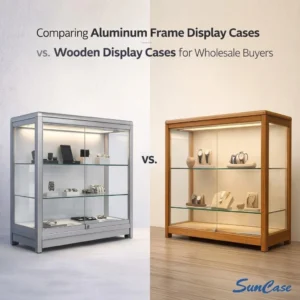
Aluminum display cases are popular among retailers because they offer specific mechanical advantages compared to wood or heavy steel. The material ensures a high strength-to-weight ratio, thereby making the structure able to withstand impacts caused by regular rearrangements in stores. It also does not warp or sag while carrying heavy things through several deployments.
Aluminum possesses a natural oxide layer that acts as an inherent protection against corrosion without requiring any chemicals. The anodized finish gives the product a modern look that suits modern-day retail outlets. Retailers adopt this approach of using a portable display case wholesale in pop-up stores or trade shows.
Jewelry vs Collectibles: Different Display Requirements
The difference between jewelry and collectibles for display requirements lies in their distinct preservation, security, and presentation needs.
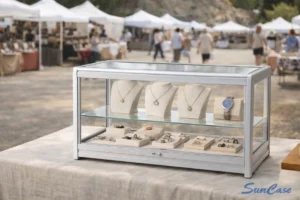
Jewelry stores must have fixtures with emphasis on high visibility, security locks, and particular low-temperature LED lighting systems. Precious stones must be showcased in crystal-clear glass panes and mechanical tamper-proof locks to protect against losses from shrinkage. The interior designs must have customized cloth inserts to avoid scratching precious metals.
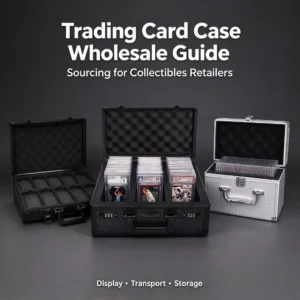
Meanwhile, collectible retail outlets require advanced dust sealing, modular layouts, and UV-filtering acrylic panels (blocking up to 99% of harmful UV rays) to accommodate diverse product dimensions. A high-end trading card display case must feature precision-machined slot widths to keep graded plastic slabs (such as PSA, BGS, or SGC) perfectly upright. This structural protection effectively prevents the environmental degradation, fading, and yellowing of vintage paper and ink caused by ambient moisture and prolonged light exposure.
Glass or Acrylic Panels: Which Should You Choose?
Before selecting either glass or acrylic panels, understand first each one’s advantages, especially in maintaining clarity regardless of years of wiping.
Glass is durable when supporting significant weight without getting deformed, thus suitable for permanent displays in retail stores with high pedestrian traffic. However, it adds to the weight of the shipment, and it is prone to breaking in case of impacts while shipping.
The advantage of acrylic panels, meanwhile, is that they offer great protection against shocks. They also reduce the weight of the display cases to about half. They are perfect for mobile applications with frequent handling. However, they can scratch easily in the long run and need specific non-abrasive cleaning compounds to avoid clouding.
5 Features Retail Buyers Should Evaluate
Security Locks
- Choose dual-cam or RFID locking systems to prevent unauthorized access.
LED Lighting
- Ensure low-voltage, low-heat LED strips are used to protect items from thermal damage.
Adjustable Shelves
- Ensure the showcase utilizes heavy-duty 6063-T5 slotted aluminum profiles with reinforced metal brackets instead of weak pins. This commercial-grade assembly allows rapid height adjustments and supports heavy collectibles or jewelry fixtures without warping or sagging over time.
Dust Protection
- Look for silicone or neoprene sealing gaskets to reduce dust buildup.
Branding Options
- Consider custom features such as laser-etched logos or colored finishes that match the brand’s identity.
OEM Customization Options
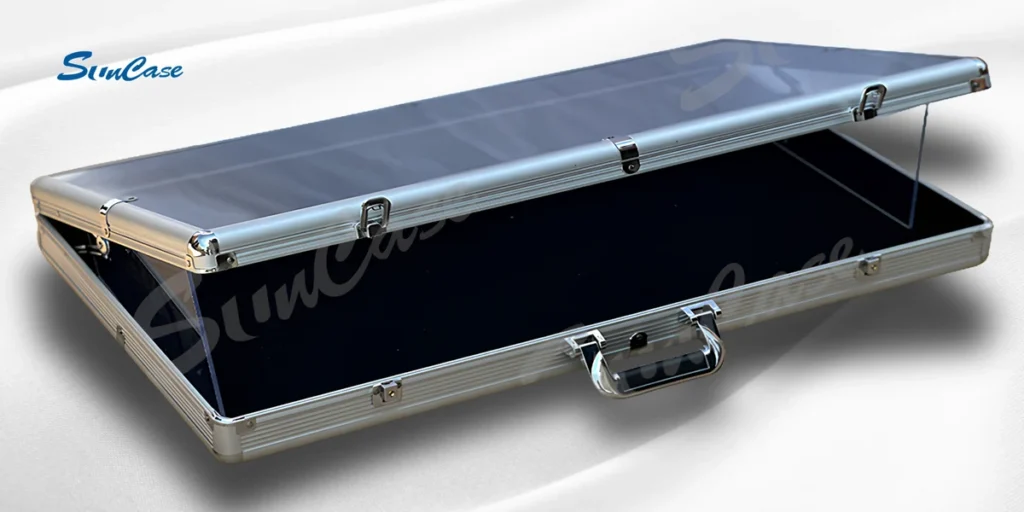
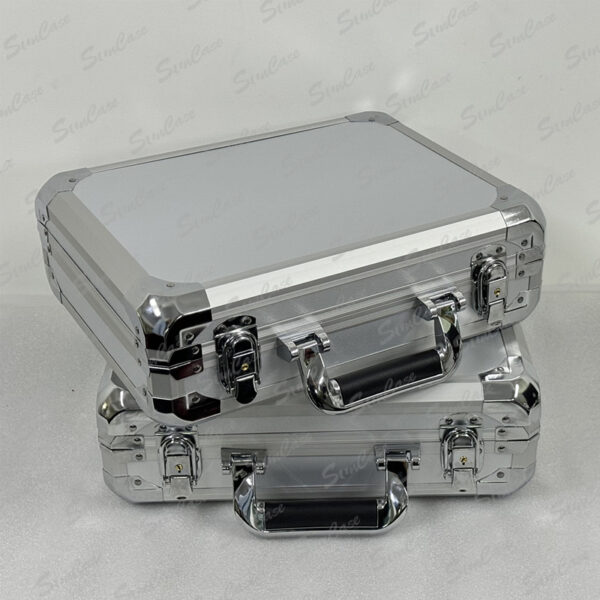
Sun Case offers OEM and ODM customization for companies looking for customized display cases, depending on their products and brands. Customers have the opportunity to customize aspects such as the size, color, logo location, and interior design. These options match precise physical dimensions and distinct brand aesthetics for retail deployment.
In case companies prefer already designed cases, then Sun Case uses the ODM customization process to make changes in existing products. This will then save time in the development process. Our engineering department provides comprehensive branding options, including precision laser-etched logos, anodized custom color finishes, and tailored interior options like high-density EVA foam inserts or premium velvet linings. These meticulous structural and aesthetic adaptations ensure each custom aluminum display case perfectly aligns with your in-store merchandising requirements, commercial security needs, and brand identity.
All these physical adaptations ensure each custom aluminum case fits exact operational transport and security workflows.
Common Mistakes When Sourcing Display Cases
Choosing Appearance Over Security
- Prioritizing decorative designs over strong frames and efficient locks can increase the risk of theft and product loss.
Ignoring Shipping Costs
- Fully assembled units often cost more to transport for collectibles and jewelry display case manufacturers. Flat-packed or knock-down designs can help reduce freight expenses.
Buying Fixed-Size Units
- Fixed layouts limit display flexibility, while modular designs can easily adapt to changing product sizes and merchandising needs.
Conclusion
Sourcing an aluminum display case requires careful evaluation of structural integrity, material options, and protective features. Moreover, retailers must always verify manufacturing compliance, like ISO 9001 for quality and RoHS for material safety.
Sun Case Supply delivers excellent manufacturing and production capabilities for commercial aluminum enclosures and custom display fixtures. We provide tailored OEM and ODM solutions to fulfill specific dimensional and security requirements. Contact us for a custom production quote today.
Frequently Asked Questions (FAQs)
What are jewelry display cases called?
- Jewelry display cases are often called showcases, display cabinets, or vitrines. Depending on their specific design and placement in a jewelry store, they go by more specific names, shapes, and sizes.
What is the best material for a commercial display case?
It depends entirely on your specific retail application:
- Tempered Glass: Best for permanent, high-traffic luxury stores due to its superior scratch resistance and distortion-free optical clarity.
- Premium Acrylic (PMMA): Best for mobile retail, pop-up trade shows, or countertops. Treated with an anti-scratch coating, it offers 17x the impact resistance of glass, enhances safety, and cuts freight shipping weight by 50%.
What is a display case used for?
- Glass-encased display cases are used for security and professionalism while presenting merchandise. Glass encased display cases ensure protection for costly and breakable objects without hindering visibility. Hence, they are widely favored to be utilized as retail display cases and commercial display cabinets.