
Aluminum Tool Case vs. Plastic Tool Case: A B2B Buyer’s Guide
Both an aluminum tool case and a plastic container offer superior mechanical properties, structural lifespan, and shielding performance. However, the B2B buyers must select the best one that lowers total operational expenses and secure fragile equipment assets.
This guide evaluates both container types to help procurement managers optimize equipment security and long-term hardware supply chains.
Quick Comparison Table
| Parameters | Aluminum Tool Box | Plastic Tool Box |
| Tensile Strength | High (Al-Mg-Mn Alloys) | Medium (PP / HDPE Polymers) |
| Impact Fracture Mode | Elastic / Plastic Deformation (Denting) | Brittle Fracture / Cracking at Temperature Extremes |
| EMI / RFI Shielding | Inherent Faraday Cage Protection | None (Requires Conductive Coating) |
| Recyclability Range | 100% Fully Recyclable Material | Down-cycled Polymers |
Durability and Impact Resistance
Heavy-Duty Environments
Aluminum tool boxes use mechanical energy absorbed through localized deformations that prevent the breaking apart of the shell. This then protects the contents from any damage. Heavy duty usage utilizes such properties of the material to protect internal parts from shock waves. Plastic materials, meanwhile, tend to break apart completely under the same stress levels.
Industrial Use
The aluminum container is not subjected to any permanent damage from exposure to hydraulic fluids, organic solvents, and heat radiation. Plastics, however, will either crack or soften due to exposure to the same environment. This proves that metal containers hold their structure even when stacked.
Field Technicians
A durable aluminum hard tool case is used to shield diagnostic tools against possible punctures during fieldwork at remote sites. With such physical protection, cost of repairing equipment is minimized and avoids damage when transporting the tools to the remote location. Technicians get stable, repeatable field performance regardless of local weather extremes.
Weight and Transportation Costs
Freight costs are heavily influenced by container weight during transportation. Modern aluminum tool boxes use high-strength, thin-gauge alloys to reduce weight while maintaining durability, helping lower shipping costs and meet workplace lifting requirements.
In contrast, plastic hard tool cases often require thicker walls to achieve similar strength, adding extra weight and increasing freight charges. Over time, the lower weight of aluminum cases can result in significant logistics savings compared to heavier plastic alternatives.
Protection for Precision Equipment
A toolbox made out of aluminum acts as a great Faraday cage for the tools inside. The metal shield prevents electromagnetic interference and radio frequency interference from affecting any readings taken by the sensors. In addition to that, gaskets have been added to the tough metal shell.
Plastic cases, however, have no natural capability for EMI shielding. Similar levels of protection usually demand further processes, such as applying conducting paints or embedding metal meshes.
Cost Analysis: Purchase Price vs Lifetime Cost
While industrial plastic cases offer lower initial procurement costs for lightweight commercial applications, they are prone to brittle fractures and latch failures under heavy wear, leading to frequent replacement cycles.
In contrast, customized aluminum hard tool cases demand a higher upfront investment but yield a much lower Total Cost of Ownership (TCO). Due to their exceptional corrosion resistance and fatigue strength, a single aluminum fleet case can outlast multiple plastic alternatives, delivering maximum long-term ROI for logistics and field operations.
Which Industries Prefer Aluminum Cases?
Industrial equipment
Heavy machinery teams use aluminum cases to move heavy alignment equipment around safely. Aluminum is a material that does not spark, making it suitable for operating in areas with flammable oil and gas refinery plants. They are often present in the mining and petrochemical industries.
Electronics
Electronic members safeguard the circuit test boards by using an aluminum box designed for this purpose while upgrading the cell towers. The metallic nature of this material provides a safe way of grounding the static electric charges before reaching the sensitive microchips.
Medical Devices
Custom aluminum enclosures are used by medical staff for the transportation of delicate laser surgery instruments and portable diagnosis equipment. The aluminum is resistant to severe disinfection washing using chemicals without any biological absorption or surface abrasion. This makes them compatible with clinical standards.
Which Industries Prefer Plastic Cases?
Consumer Tools
Plastic enclosures are commonly used in commercial consumer goods because they usually don’t face any harsh transit or weather conditions. The cost of production is also low, which enables the retailers to keep the prices affordable for the consumer market.
Promotional Kits
Promotional kits have minimal physical deterioration and function under controlled temperature conditions in office or convention settings. The plastic box serves as an acceptable temporary display container for the marketing materials.
Entry-level Products
Startups bundle entry-level diagnostic tools inside simple plastic cases to control total initial product package costs. The pricing mechanism reduces the entry barriers for customers who want to experiment with the technology platforms.
OEM Customization Comparison
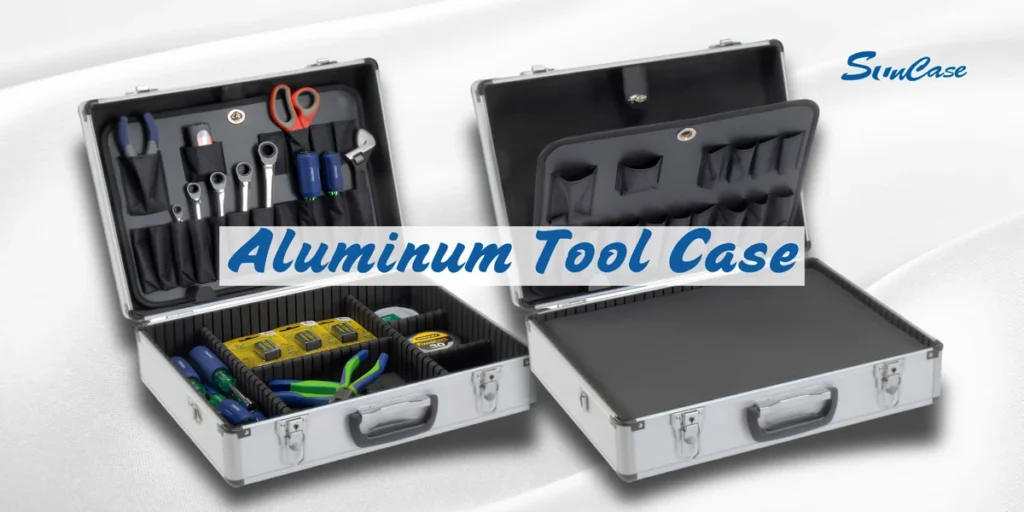
Aluminum Tool Cases: Offer unmatched engineering flexibility. Buyers can customize interior configurations—such as CNC-cut EVA foam matrices, adjustable dividers, and multi-tier trays—without paying for expensive fixed injection molds. This makes aluminum ideal for low-to-medium volume, highly specialized OEM projects.
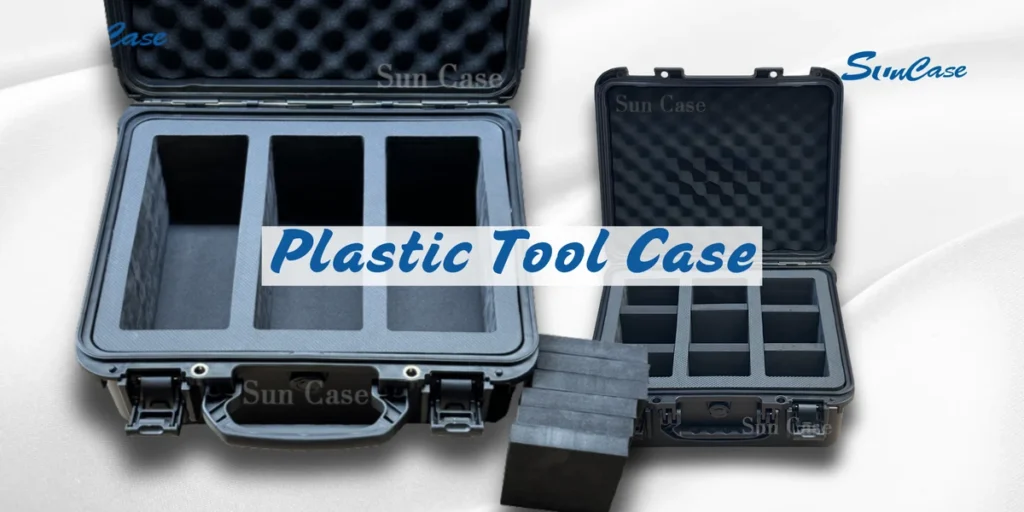
Plastic Tool Cases: Highly restricted by structural mold dimensions. Any custom dimensional modification requires developing a new steel injection mold costing tens of thousands of dollars, making short-run customizations financially unfeasible.
Conclusion
This technical analysis demonstrates that an aluminum tool case offers superior material longevity, electrostatic grounding, and structural strength under heavy stress. These enclosures comply with international quality metrics like ISO 9001 quality workflows and IP65 dust and water ingress sealing standards.
Sun Case Supply is a tool storage case manufacturer that is known for their aluminum enclosures. We provide full technical engineering support from early prototyping through bulk volume production. Contact our page to get a technical quote for your next custom project.
Frequently Asked Questions (FAQs)
Can aluminum cases achieve full IP67 dust and water submersibility protection?
- Yes, specialized aluminum cases feature continuous neoprene gaskets and heavy-duty compression latches to satisfy IP67 submersible sealing specifications.
How does the environmental recycling footprint of aluminum compare to industrial plastic?
- Aluminum enclosures are completely recyclable and maintain scrap metal value, whereas industrial plastics generally end up in landfills.
Are custom size modifications affordable for short production runs of aluminum cases?
- Yes, aluminum fabrication uses CNC punching and bending machines, avoiding the expensive steel tooling costs required for custom plastic cases.