
Director Chair Buying Guide: 7 Factors for Events, Studios and Salons
Quick Answer:
When sourcing a director chair, compare working height, documented load rating, frame and joint construction, replaceable fabric, folding operation, packed dimensions and branding options. Then match those specifications to the venue and user: events, studios, beauty schools and mobile makeup artists have different transport and setup needs. Sun Case lists makeup and director chair formats; request model-specific measurements, sample terms and quality checks before choosing a wholesale configuration.
A folding director chair can serve makeup artists, studios, event crews and salons, but product titles rarely show the details a purchasing manager needs. Seat height may affect working comfort, while folded dimensions influence storage and freight. This guide explains seven specifications to compare and how to assess a sample before ordering for resale, rental or professional use.
What Specifications Matter Most in Wholesale Director Chairs?
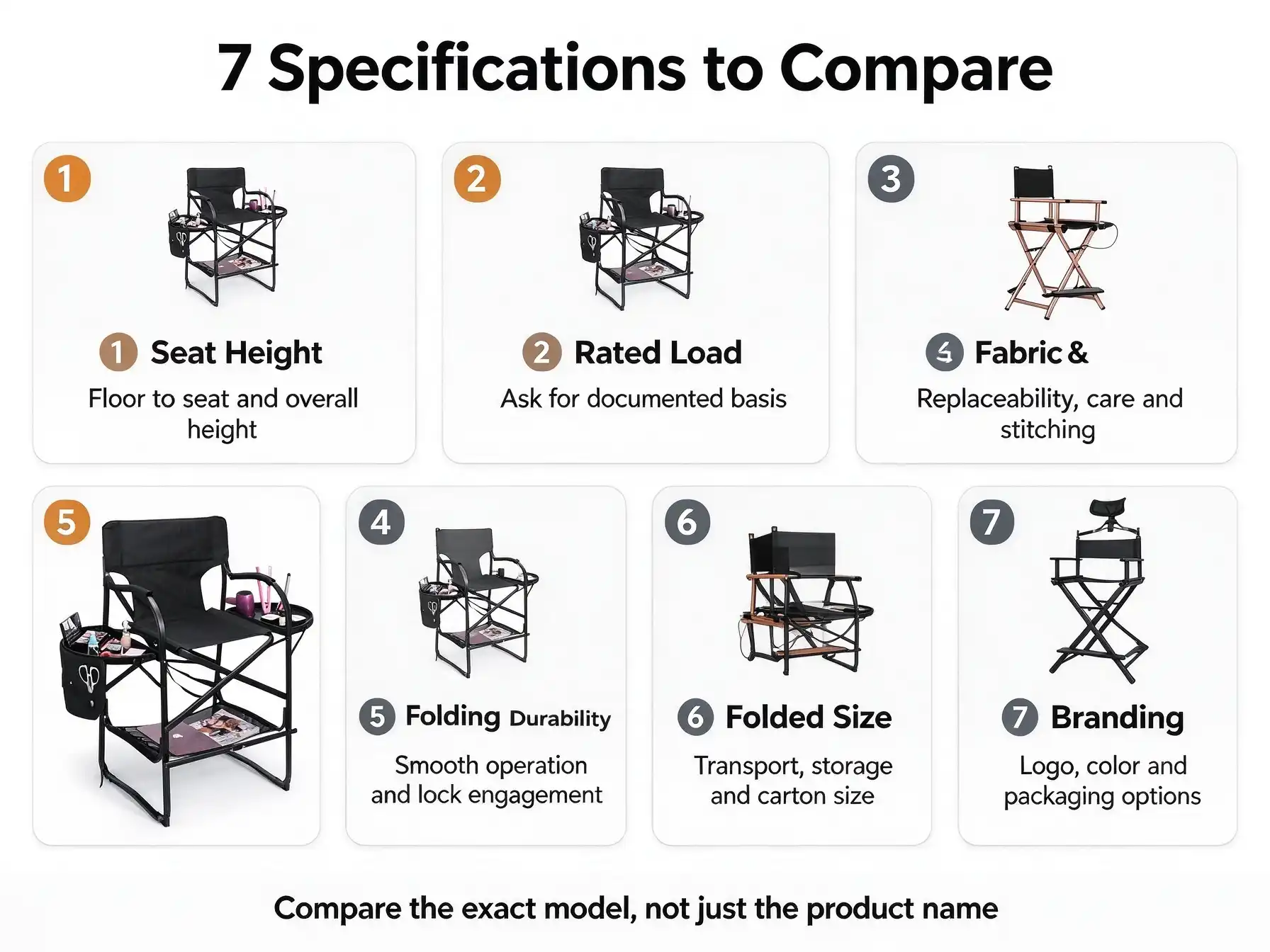
Start with the intended user and working environment, then compare seven practical factors. Ask suppliers for measurements and supporting information for the exact model rather than relying on general chair descriptions. The same makeup artist chair may work well in a studio yet be inconvenient for an event company that packs and unloads equipment every day.
1. How do seat height and working height affect fit?
Seat height influences how easily a user sits down and how the chair works with makeup tables, mirrors and tools. Check the seat height from the floor and the overall chair height. Consider the height of the intended user and whether foot support is needed.
If the chair is described as adjustable, confirm what adjusts, the range and how the mechanism locks. Test the chair alongside the work surface or setup it will be used with. For a portable makeup chair, folded height also matters for storage and transport.
2. What should buyers know about rated load and stability?
Ask for the rated load and the basis for the claim. Do not infer a load limit from appearance or frame thickness. Stability depends on the full construction, including joints, seat support and the surface where the chair is used.
Check that the chair stands evenly on a level floor and does not rock. Inspect joints and supports, and ask what test or specification backs the rated load. If the chair will be rented or shared, account for repeated setup and a broader range of users in the purchasing requirements.
3. Which frame material and joint construction should be compared?
Frame material affects weight, finish, corrosion care and cost. Joint construction affects how the chair folds and supports the user. Request materials by component and examine welds, fasteners, hinges and connection points on the sample.
Open and close the chair several times. Watch for binding, excessive looseness, sharp edges or parts that pinch during folding. A product advertised with an aluminum frame should still be checked for the materials used in every structural component.
4. Can seat and back fabric be replaced?
Fabric choice affects cleaning, comfort, appearance and repair options. Ask for the material, care instructions and whether the seat or back can be replaced if worn. For rental or school use, replacement availability may matter to long-term operating cost.
Inspect stitching, attachment points and tension. Sit briefly to check for sagging or an uncomfortable edge. If branding is applied to fabric, confirm the logo location, color and process on a sample before ordering.
5. How should folding durability be evaluated?
A chair that folds smoothly makes setup and storage easier. Test the folding mechanism repeatedly and check whether locks or braces engage as intended. Look for loose joints, sticking parts and fabric that catches during movement.
Ask the supplier what inspection or cycle test is available for the model if frequent folding is central to its use. Document the required operation and acceptable condition in the order agreement. A brief visual check cannot establish a long-term cycle rating.
6. What folded size and portability details matter?
Request folded dimensions, product weight and carton dimensions. These affect storage, vehicle loading and freight. For event companies, compare how many chairs fit in the planned transport space. For makeup artists, consider whether the folded chair can be carried with other equipment.
If a bag or strap is shown in a listing, confirm whether it is included in the quoted configuration. Check the grip points and balance when lifting the sample. A lighter chair can be easier to move, but the buyer still needs to review stability and structural requirements.
7. What branding and color customization is available?
Customization may include frame finish, fabric color, logo placement or packaging. Ask which changes are available for the chosen model and whether they affect MOQ, tooling, sample cost or production schedule. Supply a vector logo and color reference, then approve a proof or physical sample.

Which Director Chair Specs Fit Different Use Scenarios?
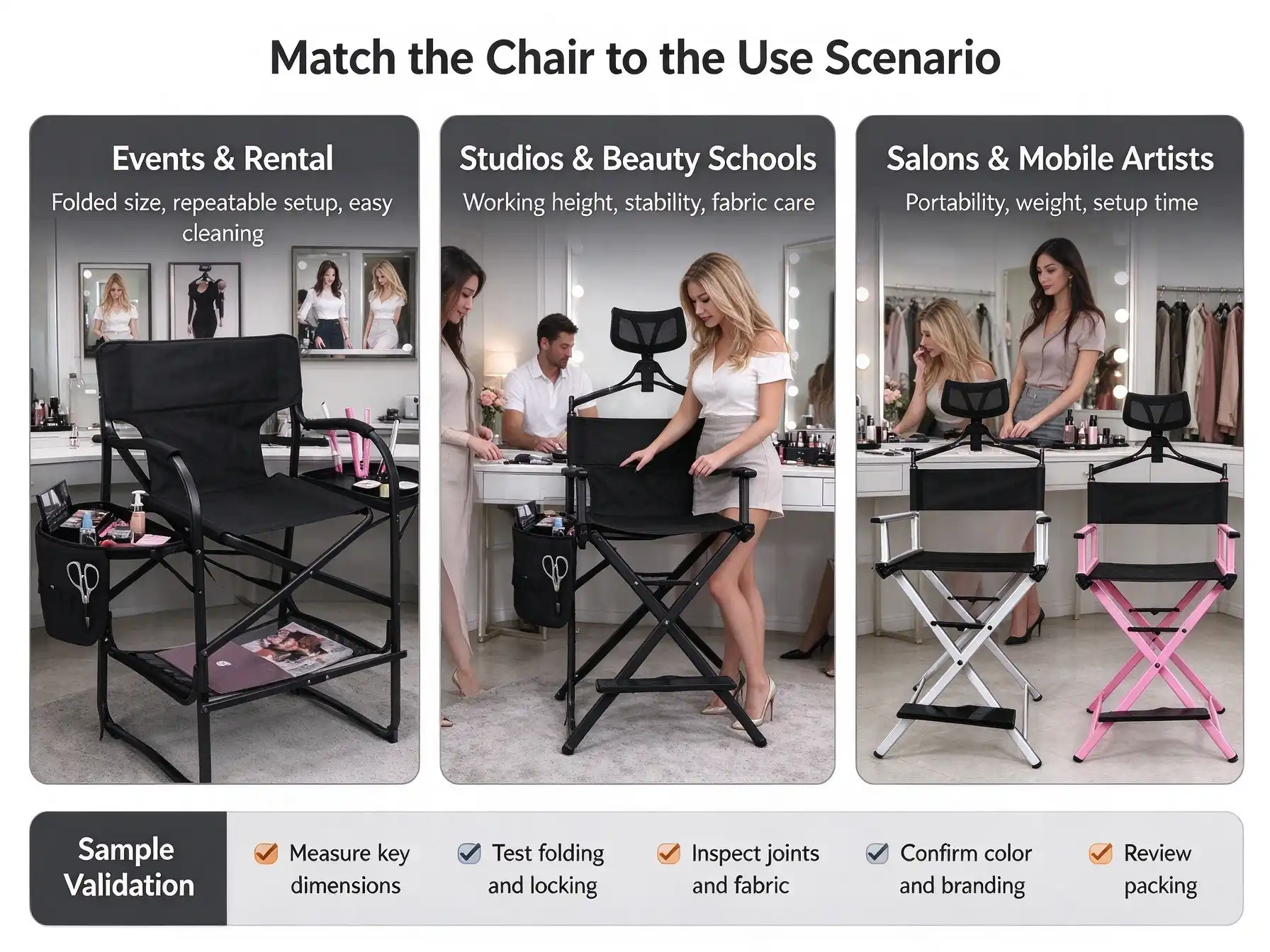
What should event and rental companies prioritize?
Event and rental operators often need repeatable setup, manageable transport, easy cleaning and replaceable wear components. Check folded dimensions, stacking or packing arrangements and how the chair holds up to frequent folding. Agree a consistent inspection approach for units returned from rental use.
What should studios and beauty schools look for?
Studios may prioritize comfortable working height and a stable fit with mirrors and stations. Beauty schools may need consistent models that can be stored between classes and cleaned regularly. Confirm the expected use, floor surface, seat height and replacement options before selecting quantities.
What matters to salons and mobile makeup artists?
Salons may keep chairs in a fixed location, while mobile artists need portability and manageable folded size. Compare the chair’s weight, carrying method and setup time with other equipment. If it will be used outdoors or on uneven surfaces, ask whether that use is appropriate for the model instead of assuming it from a product image.

Sun Case’s categoría de sillones de maquillaje includes folding makeup and director chair formats to review. Confirm seat height, frame construction, load information, fabric and included features for the exact product.
What Should Buyers Check on a Pre-Production Sample?
Measure seat height, overall height and folded dimensions. Inspect frame finish, joints, fasteners, fabric, stitching and contact points. Open and close the chair several times, then check that it locks and stands evenly. Sit on it only within the supplier’s stated load guidance and inspect for shifting or unusual noise.
Compare color, logo and packaging with the approved artwork. Record the sample version and any requested corrections. If the chair has a load or durability claim, request the applicable test information for the same model and configuration. Approve the production reference only after the agreed specifications are reflected accurately.
What Belongs in a Bulk-Order QC and Packing Checklist?
Before shipment, define how many units will be inspected and which defects require correction. Include frame alignment, folding and locking operation, fabric condition, logo placement, accessory count, dimensions and carton condition. Ask for inspection records or photos if those are part of the agreement.
For packing, confirm units per carton, protective materials, gross weight and carton dimensions. Check whether folded chairs can rub against one another or damage fabric in transit. These details support freight planning and can reduce handling issues at the distribution warehouse.
FAQ: Buying Director Chairs Wholesale
1. What is the difference between a director chair and a makeup artist chair?
The terms can overlap in listings. Compare the actual seat height, frame, foot support, dimensions and intended use rather than relying on the category label.
2. How do I choose a folding director chair for a rental business?
Prioritize repeatable folding, stability, fabric care, folded dimensions, packing efficiency and availability of replacement components. Confirm any durability claim for the selected model.
3. What load rating should a buyer require?
That depends on the target users and market requirements. Request a documented rating and its test basis, then specify the required value and evidence in the RFQ.
4. Can wholesale director chairs be customized with a logo?
Customization depends on the model and surface. Confirm available methods, MOQ, sample or setup charges, and approve the final logo proof before production.
Select for the Work, Then Approve the Sample
El mejor wholesale director chair fits its user, work height and transport routine. Compare the seven specifications, review the sample in its intended setup and document inspection and packing requirements. Sun Case lists makeup and director chair formats for review; share target quantities, user scenario and branding needs to confirm a suitable model and current order terms.


