Como são construídos os estojos de transporte de alumínio: perfis de moldura, painéis, ferragens e espuma
Quick Answer:
Um maleta de transporte de alumínio is often a composite product: aluminum frame profiles connect panels, while corners, hinges, locks and handles support closure and handling. The panels may use ABS, melamine, acrylic, aluminum or a core board, and the interior may include foam, fabric or PU lining. Buyers should ask what each component is made from and how the combination affects weight, fit, cost and use. Sun Case lists custom aluminum cases; confirm the exact bill of materials and dimensions for each model.
The word “aluminum” can make a case sound like it is made entirely from metal. Many aluminum tool case designs instead combine a metal frame with non-metal panels and a lined interior. For procurement, knowing how these parts work together makes it easier to compare suppliers, understand trade-offs and write a precise RFQ (request for quotation).
What Is an Aluminum Carrying Case Actually Made Of?
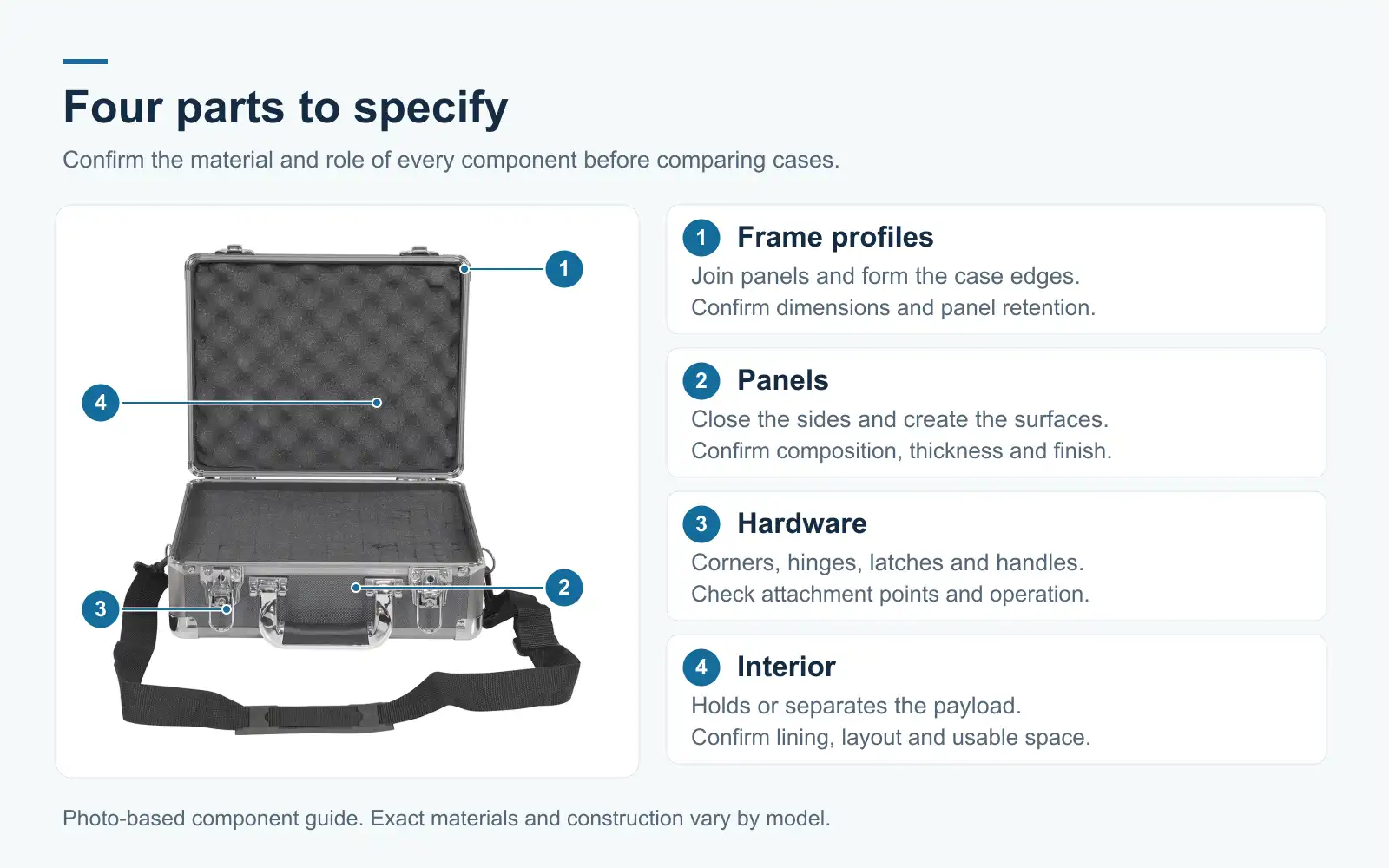
A typical case has several functional layers: the frame provides structure, panels close the sides, hardware connects and secures the case, and an interior holds or separates the payload. The exact construction varies by model and application. Ask for a component-level material description rather than relying on a category name or surface appearance.
For a caixa de alumínio personalizada, buyers should also distinguish the outer dimensions from usable internal dimensions. Profiles, lining, hinges and locks reduce available space. Request a drawing that shows the full build and clear interior measurements before confirming that equipment or tools will fit.
What Do Aluminum Frame Profiles Do?
Frame profiles are shaped aluminum sections that join the panels and form the edges of the case. They provide the framework for corners, closure and hardware. Profile shape and size can affect appearance, weight, assembly and the amount of interior space available.
When comparing an aluminum carrying case, ask for the profile dimensions and how the panels are retained. Check that joints align and that there are no sharp exposed edges. For larger or heavily used cases, share the payload and handling conditions so the supplier can propose an appropriate construction rather than relying on a generic profile description.
Which Case Panel Materials Should Buyers Compare?
Panels close the frame and create the visible surfaces. Common options may include ABS, melamine-faced board, acrylic or aluminum sheet, but suppliers’ constructions differ. Each option has trade-offs in weight, finish, appearance, cleaning and cost. “Aluminum case” does not necessarily mean aluminum panels on every side.
What role can ABS, melamine and acrylic panels play?
ABS is a plastic panel option that can provide a formed or finished surface. Melamine may refer to a decorative surface bonded to a board. Acrílico is often selected when visibility or a particular gloss finish is desired. These material names do not by themselves establish impact resistance or suitability for a given payload.
Ask the supplier to identify the panel material, thickness, finish and location in the case. If a transparent panel is used, check scratch visibility, cleaning guidance and how it is supported by the frame. Confirm all details against a physical sample or written specification.

When are aluminum panels used?
Some designs use aluminum sheet or plate panels, while others use aluminum mainly in the frame or trim. Metal panels can change the case’s weight, cost and appearance. Buyers should confirm whether the material is used on the lid, base or all sides and how it is joined to the frame.
Avoid comparing two cases as equivalent based only on the word “aluminum.” Ask for panel composition and thickness, along with the weight of the finished case.
Where Do MDF and Other Core Boards Fit in Composite Case Construction?
MDF (medium-density fiberboard) and other boards can serve as a panel core or structural layer beneath a surface finish. The core helps shape the panel and can contribute to stiffness, but construction and thickness vary. A finished panel may combine a core board with a decorative or protective outer layer.
Ask which board is used, where it appears, how the edges are protected and whether the supplier can provide a material specification. The answer helps buyers compare weight and construction and understand how the case should be handled or stored. If moisture exposure or a particular load matters, state that requirement and ask for supporting evidence for the proposed model.
How Do Corners, Hinges, Locks and Handles Affect Durability?
Hardware determines how the case opens, closes and is carried. Corners protect or cover edge junctions; hinges connect lid and base; latches or locks keep the case closed; handles support lifting. The right setup depends on size, contents and frequency of use.
Inspect attachment points and operate the hardware on a sample. Check that latches align without excessive force, hinges move smoothly and handles feel secure with the expected load. Identify whether keys, locks, straps or other accessories are included. If the case will be handled frequently, make those requirements explicit in the RFQ and sample checklist.
What Interior Protection Options Are Available?
Interior materials may include EVA, pick-and-pluck foam, fabric or PU lining. Foam can support and separate equipment; fabric or PU surfaces can finish the interior and help keep contents from contacting bare panels. The right configuration depends on the items, required access and whether the layout will change.
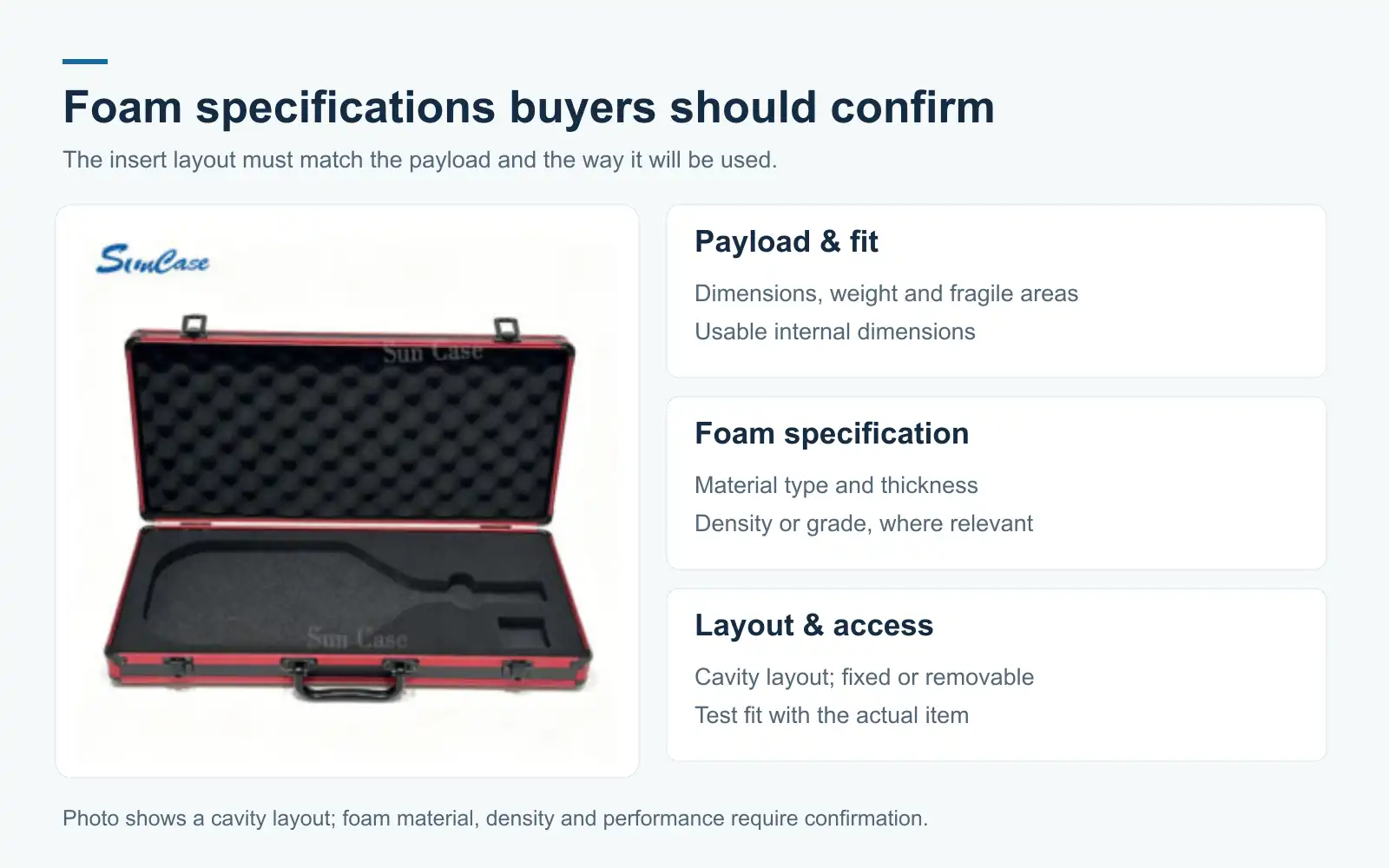
An aluminum case with foam should be specified by more than the word “foam.” State the payload dimensions, weight, fragile areas, desired cavity layout and usable interior dimensions. Ask about material type, thickness, density or grade where relevant, and whether cavities are fixed or user-removable. Test fit with the actual item before approval.

Sun Case lists caixas de alumínio personalizadas and products with different interior options. These listings can help buyers identify starting formats; verify the exact model’s materials, foam design, dimensions and customization availability before ordering.
How Do Frame, Panel and Interior Choices Affect Performance?
How do material choices affect weight and portability?
Every layer contributes to the finished weight: frame, panels, hardware, lining and foam. Compare the empty case weight and estimated loaded weight with the intended carrying method. A configuration that is easy to move when empty may become cumbersome once tools or equipment are inside.
What should buyers know about impact protection?
Protection depends on the complete case, the payload, interior retention and handling conditions. A rigid-looking frame or thick foam does not prove a specific impact rating. If a test result matters, define the requirement and ask for evidence that identifies the tested model and configuration.
How do finish and construction support brand positioning?
Panel finish, hardware color, lining and logo placement influence appearance. Buyers should balance aesthetics with cleanability, durability expectations and cost. Request a sample or detailed proof to judge the combined materials rather than approving a logo in isolation.
Why do cost and manufacturability vary?
Materials, dimensions, tooling, hardware, foam cutting, finish, customization and order quantity all affect price. A complex insert or uncommon panel can add setup cost or affect lead time. Ask suppliers to itemize custom elements and compare quotations with the same specification and quantity.
Which Material Combination Fits Different Applications?
A presentation case may prioritize finish and visibility, while a tool case may prioritize organized access and a foam layout. A sample case may need a lighter build for frequent carrying; a larger transport case may need different hardware and internal retention. These are starting considerations, not universal rules.
List the payload, use frequency, travel conditions, budget and visual requirements. Ask the supplier to recommend a configuration and explain the trade-offs. Then review dimensions, weight and fit on a sample. Avoid choosing materials based solely on a generic claim such as “heavy duty” or “premium.”
What Should Buyers Specify in a Custom Aluminum Case RFQ?
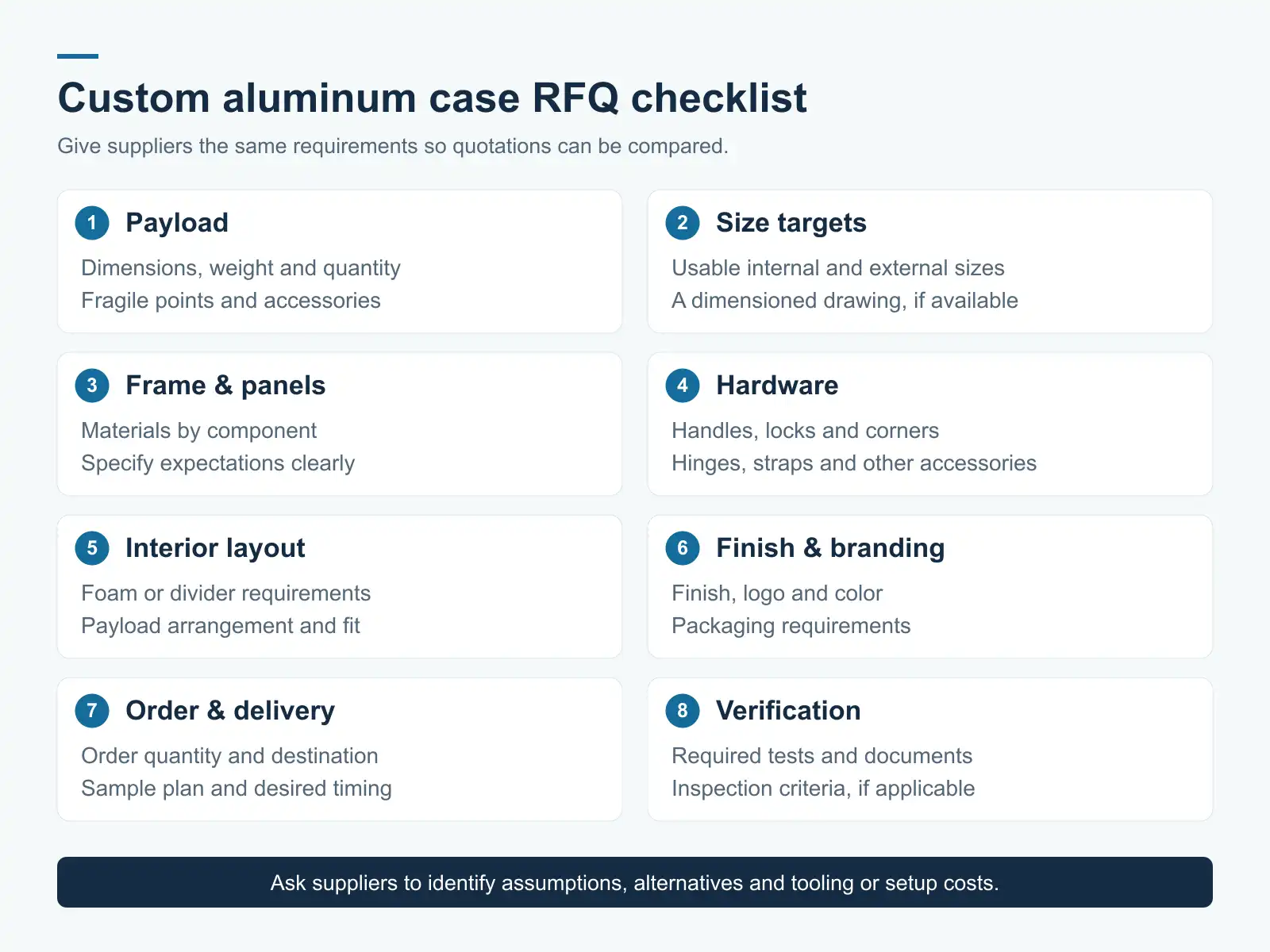
Include the following in a clear request:
- Payload dimensions, weight, quantity and fragile points.
- Internal and external size targets or a dimensioned drawing.
- Frame and panel material expectations by component.
- Hardware, handles, locks, corners and any accessories.
- Interior layout, foam or divider requirements.
- Finish, logo, color and packaging.
- Order quantity, destination, sample plan and desired timing.
- Required tests, documents or inspection criteria, if applicable.
Ask the supplier to identify assumptions, alternatives and any tooling or setup costs. Sun Case describes custom projects that may begin with a drawing, sample or functional requirements. Provide your payload and use case to request a proposal, then document the approved construction, MOQ, sample and delivery terms in writing.
FAQ: Aluminum Case Construction
1. Is an aluminum carrying case made entirely from aluminum?
Not necessarily. Many designs combine an aluminum frame with panels made from other materials. Ask for the material used in each component.
2. What is the difference between an aluminum tool case and an aluminum case with foam?
“Tool case” describes a use or category, while “with foam” describes an interior feature. Confirm the exact panel construction, foam material, cavity layout and dimensions for the selected model.
3. Is a thicker panel always stronger?
Not automatically. Performance depends on material, support, assembly, case size and use conditions. Request a specification or test evidence when a measurable performance requirement matters.
4. What should I send a custom case manufacturer?
Provide payload measurements, weight, accessories, fragile areas, desired layout, handling conditions, quantities, branding and destination. Drawings or a sample can help clarify the design.
Specify the Components, Then Review the Complete Case
An aluminum carrying case is a system of frame, panels, hardware and interior materials. Buyers who specify each component can compare offers more accurately and avoid assumptions based on product names. Sun Case lists custom case formats for review; send the payload, dimensions, quantities and branding needs to confirm a configuration and current commercial terms.