보호용 하드 케이스 테스트 가이드: 구매자가 IP 등급, 낙하 테스트 및 충격 저항을 평가하는 방법
Quick Answer:
When buying a protective hard case, match tests to the actual risks: IP tests address dust and water ingress, while drop, impact, crush and vibration tests address different handling conditions. Check that a report identifies the exact model, configuration, method, pass criteria and date. Foam and internal retention matter because the case must protect the payload as well as its exterior. Sun Case lists protective equipment case formats; request model-specific test evidence and confirm the required protection level before ordering.
“방수복,” “shockproof” and “heavy duty” are common product phrases, but they do not tell a purchasing manager which conditions a case has passed. This guide explains what common protective hard case tests evaluate, how to review supplier evidence and what to include in an RFQ. It is intended to help buyers ask precise questions; it does not certify any particular product.
What Does a Protective Case Test Actually Verify?
Each test has a defined scope. An ingress test checks whether dust or water enters under stated conditions. A drop test checks a specified case and payload under a defined drop procedure. Vibration testing evaluates repeated movement under a particular profile. Results should not be generalized beyond the tested sample, setup and criteria.
Ask what was tested: empty case or loaded case, which orientation, payload weight, closures, foam, accessories and configuration. A report for one model or sample does not automatically apply to a similar-looking product. Record the exact model number and revision in your sourcing documents.
How Should Buyers Read IP Ratings for Dust and Water Protection?
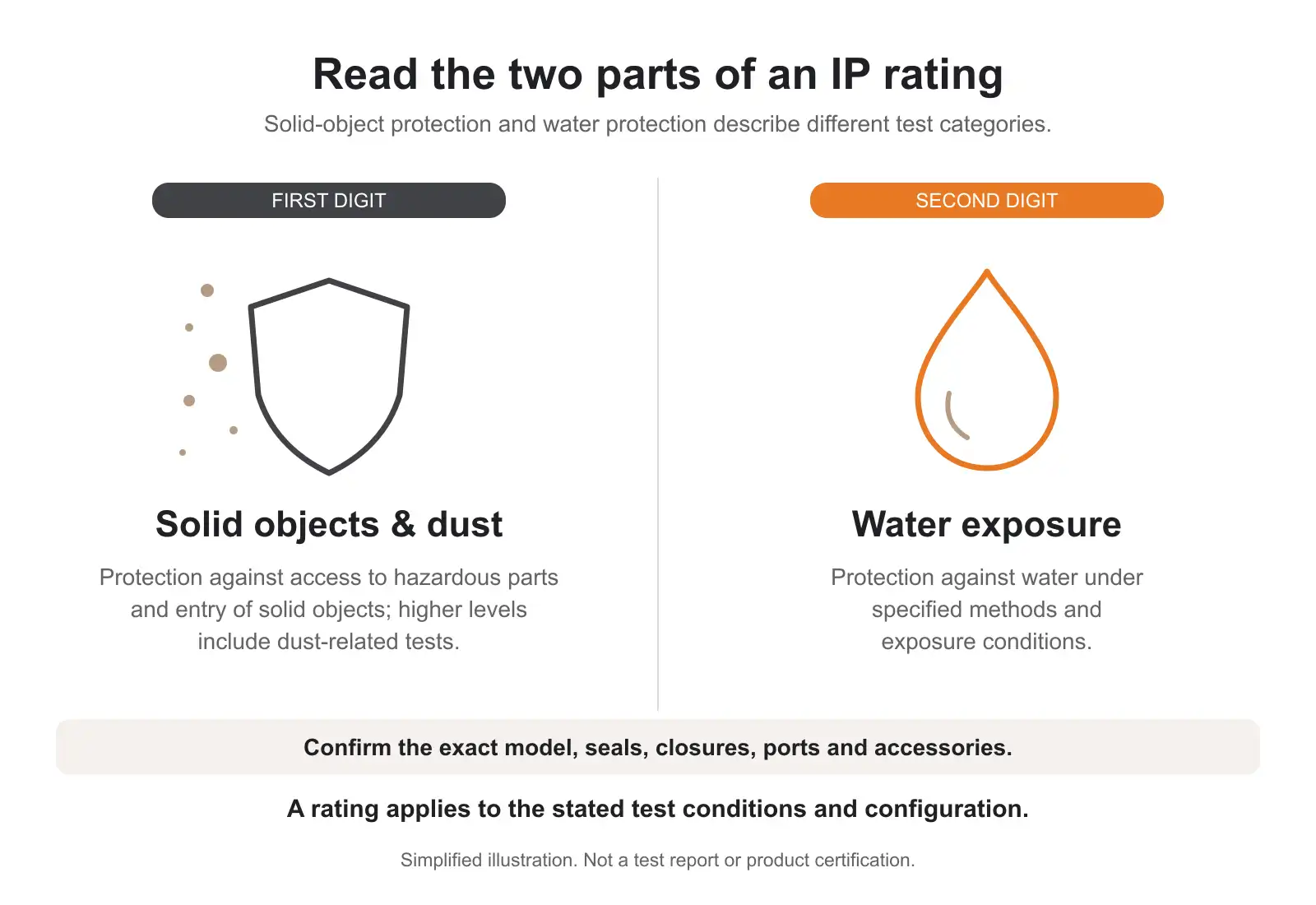
An IP rating is an ingress protection code defined by a test standard. The two digits describe different protection categories: the first relates to access by solid objects or dust, while the second relates to water exposure. The rating only applies to the test conditions and configuration stated in the applicable standard and report.
What do the two IP digits mean?
The first digit indicates protection against access to hazardous parts and the entry of solid objects, with higher levels including dust-related tests. The second digit indicates protection against water under specified methods and exposure conditions. Buyers should consult the relevant standard and test report for the exact level and procedure rather than relying on a simplified marketing summary.
If a supplier claims an IP rating, request the report or certificate and check the tested model, closures, seals, ports, valves and any accessories. Confirm that the production configuration is the same as the tested one. A change to a gasket, latch, panel or opening may affect the result.
Does IP67 mean a case is simply “waterproof”?
안 IP67 case has been tested for defined dust and temporary immersion conditions under the relevant method. It does not mean a case is suitable for every underwater use, pressure condition or duration. “Water-resistant” is broader marketing language and does not state a particular test level.
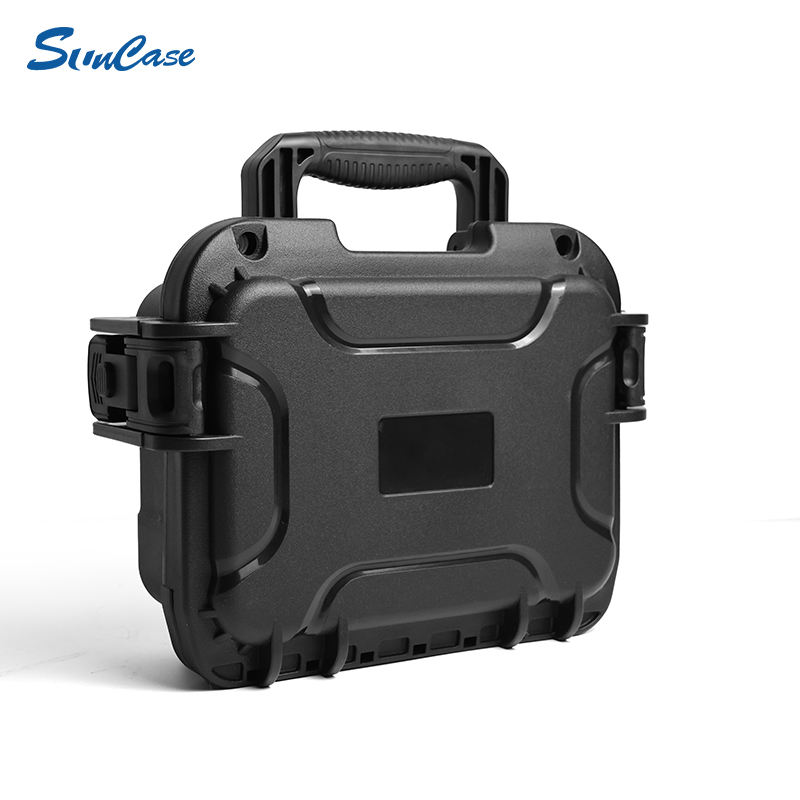
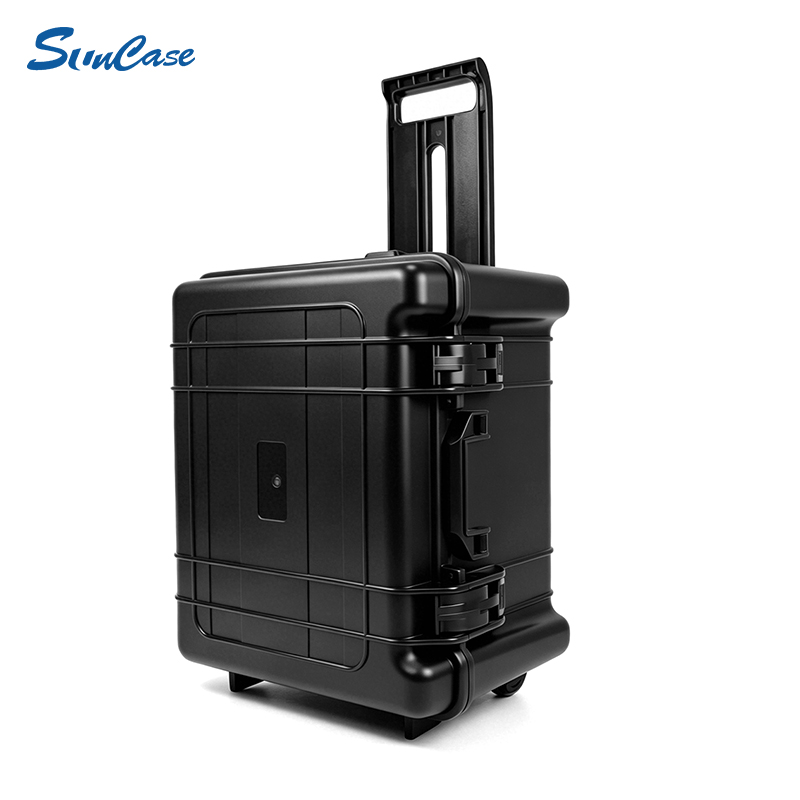
When a buyer needs a specific rating, specify the required code and ask for evidence tied to the exact case configuration. Do not treat a product title or image as proof. A protective hard case listing can be reviewed as a product example, but buyers should confirm whether it carries any applicable test rating and request the supporting documentation directly.
What Should Buyers Ask About Drop and Impact Testing?
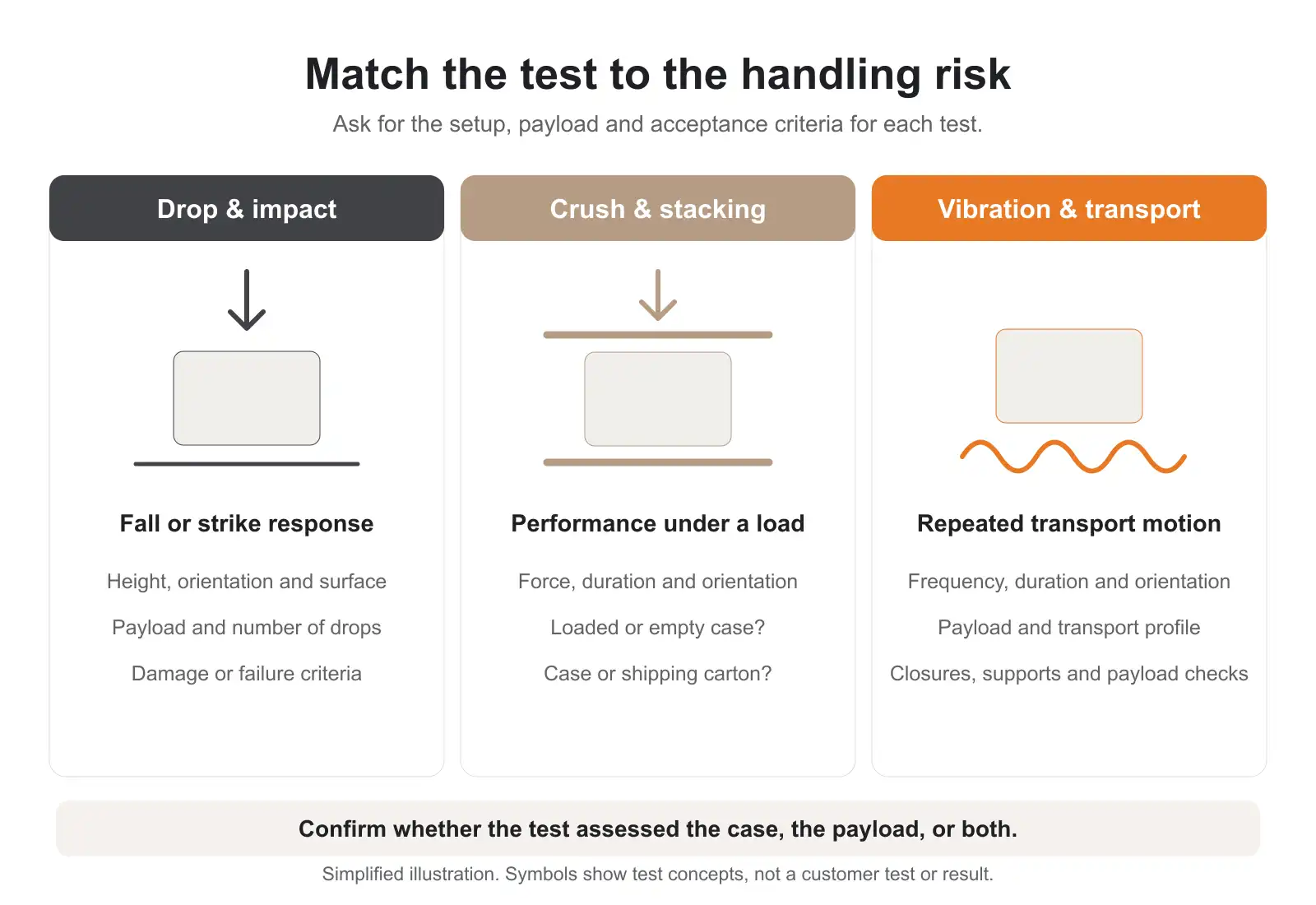
Drop and impact tests can help evaluate how a case responds to a defined fall or strike. The result depends on drop height, orientation, surface, payload, closure state, number of drops and acceptance criteria. Ask for all relevant conditions and what damage was considered a failure.
For equipment cases, verify that the test used a payload representative of your item or a specified equivalent. A test on an empty case may not show whether the item inside remains protected. Clarify whether the test examined case damage, payload function, or both.
How Do Crush, Stacking and Compression Tests Apply?
Compression or stacking tests examine performance under a specified force or load. They may be relevant when cartons or cases are stacked during storage or transit. The buyer should state stacking height, duration, orientation and any environmental conditions that matter.
Do not assume a flat lid means the case is safe to stack. Ask what load the case is intended to support and whether the result applies to loaded units, empty units or shipping cartons. If the supplier has no relevant test, include a sample evaluation or a clearly defined design requirement in the RFQ.
When Are Vibration and Transport Tests Useful?
Vibration tests simulate repeated motion under a defined profile. They may help buyers assess whether closures loosen, interior supports shift or a payload is affected during transport. A vibration test should identify frequency range, duration, orientation, payload and acceptance checks.
The right profile depends on the transport mode and route. A case transported locally may face different conditions from one shipped by air, truck or parcel network. If transport testing matters, describe the route and handling assumptions and ask the supplier what method can be performed for the proposed configuration.
When Do Temperature and Environmental Tests Matter?
Temperature, humidity or other environmental tests matter when the case or contents will experience conditions beyond ordinary indoor storage. Materials, seals, adhesives and foam may respond differently to heat, cold or moisture. Specify the expected range, duration and whether the case is exposed while open or closed.
Avoid asking vaguely for “all weather” protection. Define the actual environment and request relevant evidence. If no formal test is needed, check material specifications and sample behavior under the intended use, while keeping claims limited to what has been verified.
Why Do Foam and Internal Retention Affect Real Protection?
The outer shell cannot prevent all movement inside the case. Foam, dividers or straps help position the payload and reduce contact between items. Their effectiveness depends on fit, material, cavity design, thickness and the load. Too-loose cavities allow movement; too-tight cavities can press on sensitive parts.
Provide the equipment dimensions, weight and fragile points. Review the insert with the actual item and accessories in place. Confirm that the lid closes without harmful pressure and that the contents stay positioned when the case is handled. If a test is intended to demonstrate protection, clarify whether the tested foam and payload match the production design.
How Should Buyers Review a Supplier Test Report or Certificate?
Does the report identify the model and sample?
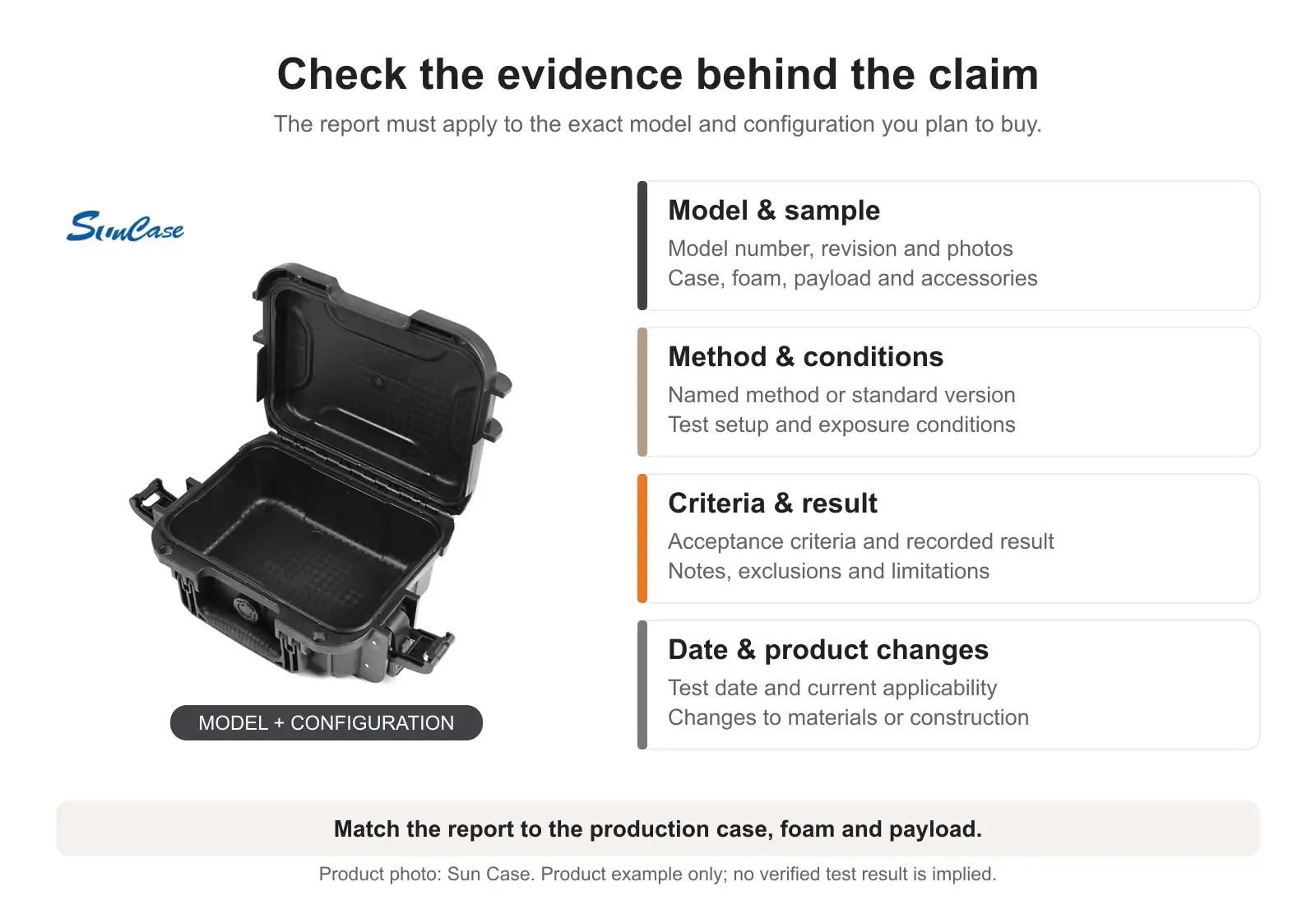
Look for model number, product revision, sample description, configuration and identifying photos where available. Confirm whether the report names the same case and interior that you plan to buy. If a certificate covers a product family, ask which variants are included.
Is the test method and standard clearly stated?
The report should name the method or standard and provide enough detail to understand the conditions. Confirm the standard version and whether the laboratory or issuing body is appropriate for the requested evidence. Do not assume that a logo or certificate header proves the scope of a particular test.
Are pass criteria and test date recorded?
Check the acceptance criteria, result, date and any notes or limitations. Ask whether the report remains applicable after product changes. If production materials or construction differ from the tested sample, request an explanation and updated evidence where necessary.
What Sample Checks Are Useful When No Formal Rating Is Required?
Load the sample with representative equipment and inspect the fit, closures, handles, wheels and interior. Check that items do not shift during ordinary handling and that the case opens and closes as intended. Examine seams, panels, latches and protective inserts. Test the packaging separately if shipping damage is a concern.
These checks help buyers review fit and workmanship; they do not establish an IP rating or standardized impact performance. Set appropriate expectations in product copy and purchase documents. If a formal protection level matters to customers, ask for the corresponding test evidence before making the claim.
What Should an RFQ Say When a Specific Protection Level Is Required?
State the required test or rating, standard and version if known, payload, configuration, pass criteria, destination and documents needed. Identify whether the case must be tested empty or with representative equipment and whether the production sample must match the tested model. Ask the supplier to list any assumptions and costs for testing.
Include foam or retention requirements, closure details, seals, ports, accessories and packaging where relevant. Agree who arranges testing, who pays, what happens if the sample fails and how an approved change is controlled. These points prevent a broad phrase from becoming an unclear obligation.
FAQ: Protective Hard Case Testing
1. Does a hard case automatically protect equipment from drops?
No. The outcome depends on the case construction, payload, internal retention and the drop conditions. Request relevant test evidence or evaluate a sample for your stated use.
2. Is IP67 the same as waterproof?
IP67 refers to defined dust and temporary immersion tests under a specified standard. It does not cover every exposure or underwater use. Review the report and intended conditions.
3. What should a case test report include?
It should identify the model and configuration, test method, conditions, acceptance criteria, result and date. Verify that it applies to the product being quoted.
4. Should the payload be included in a drop test?
If the buyer needs evidence that equipment remains protected, a representative payload or clearly defined equivalent is important. Ask what was included and what the test assessed.
Match Evidence to the Risk
Choose tests according to the risks your case will face and verify that evidence applies to the exact model and configuration. Review IP, impact, compression and vibration claims separately, and include the payload and foam in the discussion. Sun Case lists protective case options for buyer review; share your protection requirements and destination to confirm available configurations and supporting information before ordering.