
Makeup Box vs Makeup Case: Which Product Should Distributors Stock?
クイックアンサー:
Distributors should compare a makeup box and makeup case by the job customers need done: portability, product mix, compartment layout, display and shipping efficiency. The names overlap in retail listings, so check actual dimensions, materials, closure and included organization features. A compact box may suit a curated assortment, while a carrying case may better fit professionals who move products. Sun Case lists portable makeup case formats; review specific models and customer demand before deciding whether to stock one type or both.
For buyers, “makeup box” and “makeup case” do not always describe distinct product categories. A listing may use the terms interchangeably, even when the products differ in construction and capacity. This guide helps distributors compare the formats by purchasing factors, identify likely customer segments and build an assortment that reflects the channel.
Makeup Box vs Makeup Case: What Is the Practical Difference?
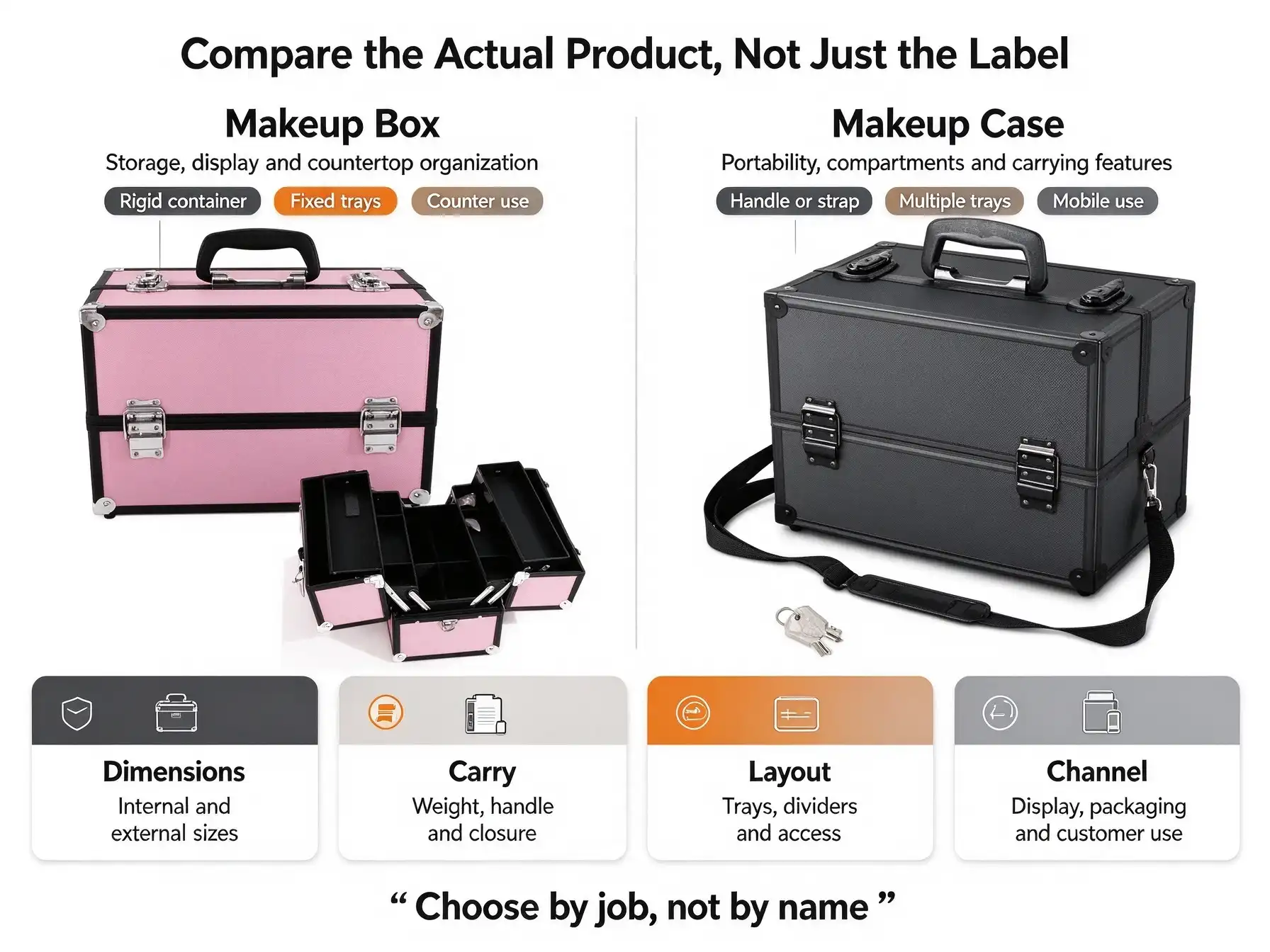
A makeup box often suggests a rigid container designed for organized storage or display. A makeup case may emphasize portability, compartments and carrying features. In practice, the products can overlap: a box may include a handle and trays, while a case may be a compact organizer without a shoulder strap.
Compare the actual product rather than the label. Review external and internal dimensions, material, closure, handle, trays, dividers and intended use. Confirm whether the configuration shown in the product photo is included or represents an optional version. The right choice depends on how customers will store, carry and access their cosmetics.
How Do Makeup Boxes and Cases Compare on Buyer Factors?
Which format is easier to carry and protect in transport?
Portability depends on size, weight, handle or strap, closure and loaded weight. A smaller cosmetic case may suit travel or short trips between locations. A larger box can hold more products but may be awkward when full. Check how the handle is attached and whether the closure stays secure during normal carrying.
If customers travel frequently, ask what protection the construction provides and how the product should be handled. A rigid exterior does not automatically mean a case has passed an impact test. Include the intended transport conditions in product selection and supplier questions.
How do capacity and compartment design differ?
Capacity depends on usable interior space, not only the outside dimensions. Trays and dividers organize smaller items but occupy room. A single open compartment may fit taller bottles but offer less separation. Compare the layout with products customers actually sell or carry.
Ask for compartment measurements and confirm whether dividers are removable. A makeup storage box with fixed trays may suit a standard assortment; a flexible 化粧ケース may fit mixed products better. If the intended load is varied, test representative packages in a sample.

Which product has stronger retail display appeal?
Retail appeal is shaped by finish, color, visibility and perceived value. A display-oriented box may look attractive on a shelf, while a portable case can communicate professional use. Product photography should show the interior and dimensions clearly so online shoppers understand what is included.
のために private label, evaluate logo placement and packaging alongside the product itself. Confirm that color, surface finish and branding match the target market and price point. Request a proof or sample before committing to bulk packaging.
What should buyers consider about shipping and warehouse efficiency?
Compare carton dimensions, units per carton, protective packaging and product weight. A larger box can take more warehouse space and increase freight cost even when its unit price is attractive. Confirm whether products can be nested safely and whether the packaging protects corners, hinges and finishes.
Include landed cost in the assortment decision. Ask the supplier for packed dimensions and weights for the exact configuration, then compare freight and storage impacts at your expected order quantity.
Which Customer Segments Prefer Makeup Boxes?
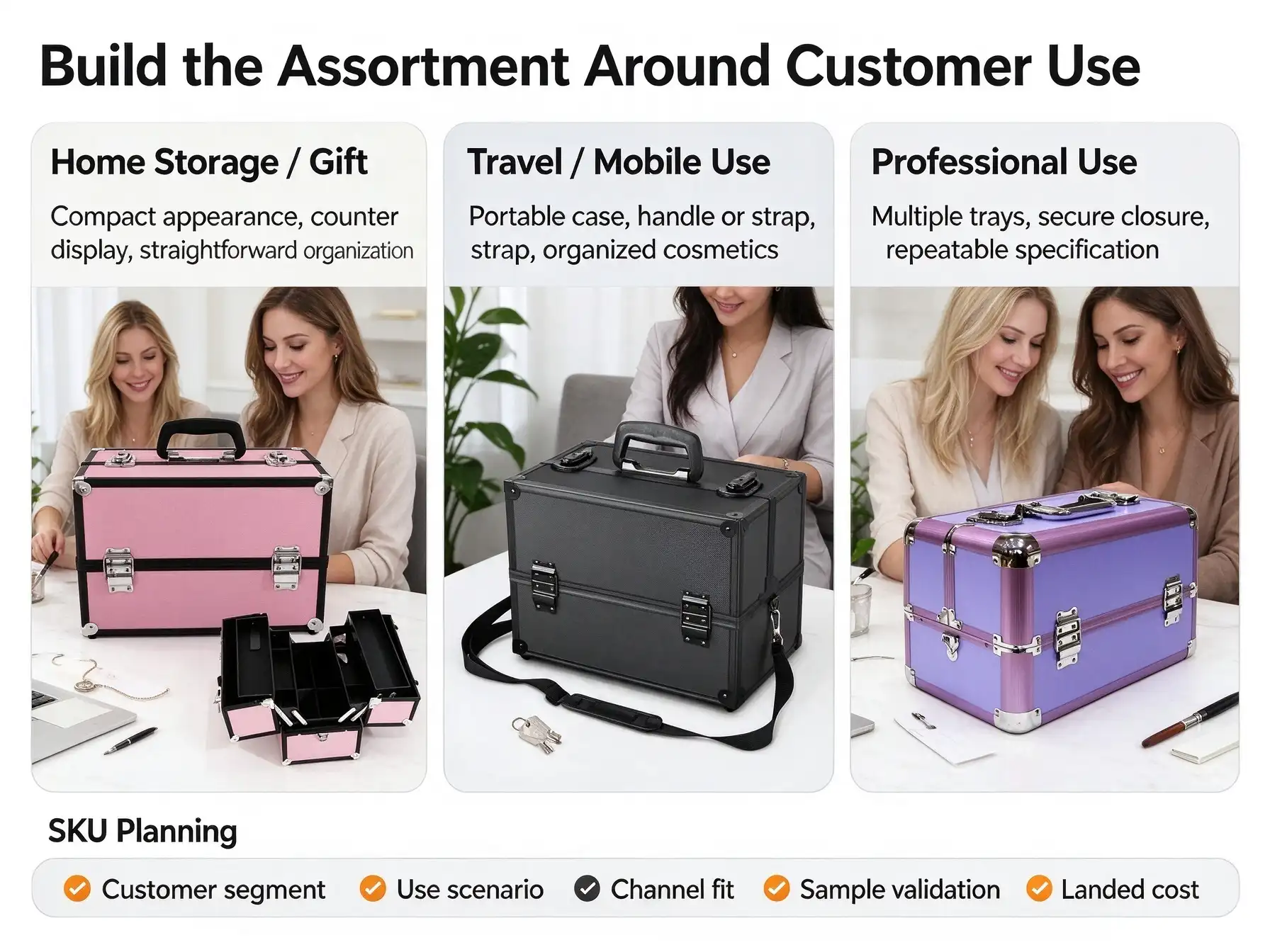
Consumers purchasing a gift or a home storage solution may prefer a box with a polished appearance and straightforward organization. Beauty retailers may also favor compact formats that merchandise neatly and serve a clear price tier. The actual preference varies by assortment and brand, so use customer feedback and sales data where available.
A box can work well when the customer mainly stores products in one place. Check whether the lid opens easily on a counter and whether contents remain visible. If portability is important, confirm that the handle and closure suit carrying rather than assuming a storage box is travel-ready.
Which Customer Segments Prefer Makeup Cases?
Makeup artists, students and mobile beauty professionals may value a case that carries tools and cosmetics between locations. A professional makeup case may offer multiple trays, locks or a strap, depending on the model. Confirm those features individually and compare the loaded weight with the way customers travel.
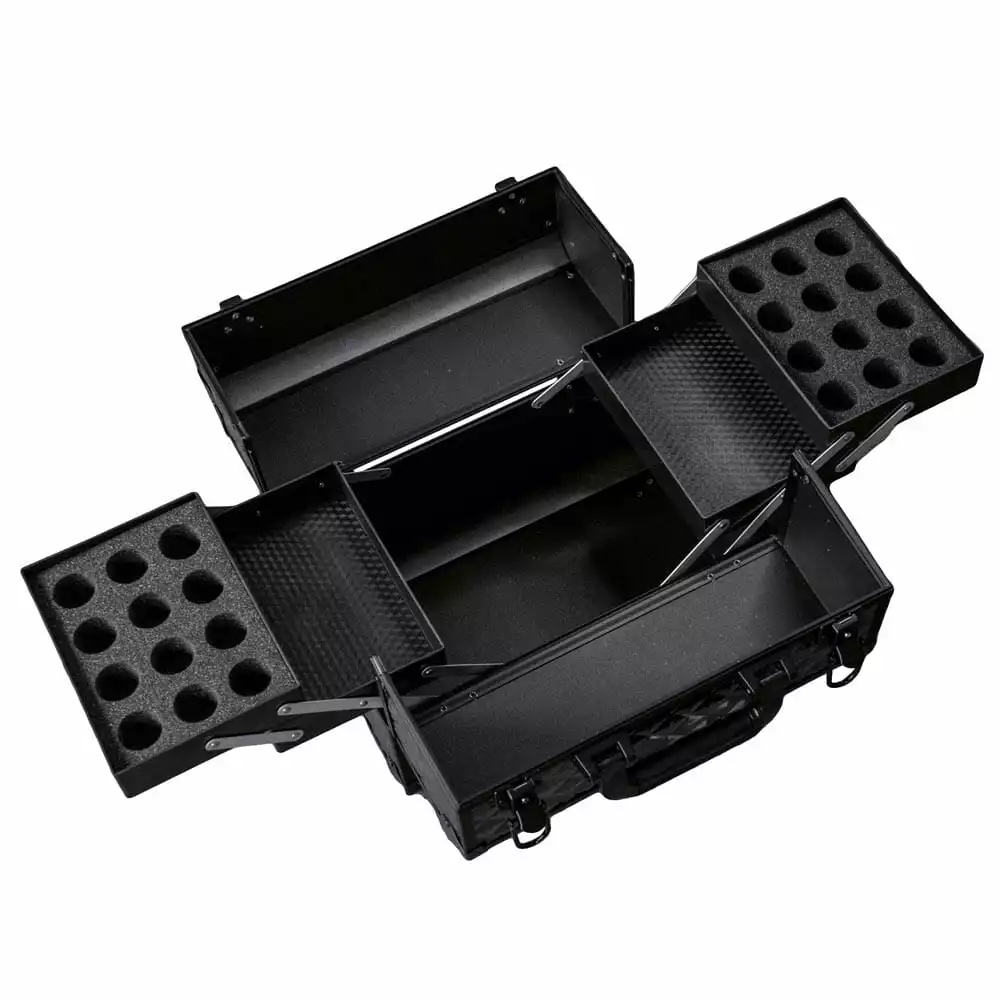
Consumers can also prefer a case for organizing a collection or travel products. In that setting, compact dimensions and easy access may be more valuable than maximum capacity. Choose product information that clearly describes dimensions, organization and intended use.
How Does Retail Channel Change the Best Product Mix?
What should beauty supply stores stock?
Physical stores can offer a small range of sizes and let customers compare finishes in person. Consider a compact option, a mid-size organizer and a professional format if demand supports each tier. Keep the differences clear in shelf information and staff guidance.
How should e-commerce and marketplace sellers choose?
Online buyers rely on photos, dimensions and clear lists of included components. Select products with layouts that are easy to explain and provide images of the interior. Confirm carton dimensions and shipping cost before listing, and avoid unsupported compatibility or capacity claims.
What do professional beauty distributors need?
Professional distributors may need repeatable specifications, replacement or replenishment options and private-label support. Compare supplier communication, sample availability, MOQ and lead time along with product features. Document the approved configuration so reorder discussions remain consistent.
What Should Buyers Consider for Private Label and Customization?
Customization can include logo method, color, labels, packaging and interior layout. Identify which elements are essential to your brand and which can remain standard. Ask how each change affects MOQ, tooling or setup cost, sample timing and production schedule.
Sun Caseの portable makeup case category presents several formats that distributors can review. The site describes customizable trays for its portable case range, but availability depends on the model. Confirm the dimensions and customization scope for the exact SKU before planning a branded assortment.
When Should Distributors Stock Both Categories?
Stock both when they serve distinct customers or price points and when demand justifies the inventory. For example, a compact box may serve home storage while a larger carrying case serves professionals. The products should have a clear difference in use or features; duplicate formats can create inventory complexity without helping customers choose.
Use sales history, customer requests, competitor assortment and storage costs to test the case for each SKU. Start with a focused range if demand is uncertain, then expand once sell-through and returns show which format is working. Consider whether one versatile model can serve both jobs before adding more variations.
What Sample Checks Matter Before Adding a New SKU?
Open and close the sample, test handles and latches, inspect seams and finishes, and measure internal compartments. Load the products it is meant to hold. Check whether trays move smoothly and whether bottles or tools are easy to remove. Review the packed sample or packaging specification for freight protection.
If customizing, compare logo and color with the approved proof. Record materials, dimensions, included accessories, MOQ, sample terms, current lead time and inspection criteria. A sample confirms a particular unit; agree separately on how production units will be checked.
FAQ: Makeup Box and Makeup Case Buying
1. Is a makeup box the same as a makeup case?
The terms can overlap. Compare construction, carrying features, dimensions and interior layout on the exact product rather than assuming the names define separate formats.
2. Which is better for travel: a makeup box or a makeup case?
Choose based on weight, size, handle or strap, closure and how products are organized. Test the loaded format with the intended contents and transport routine.
3. What should a distributor compare before ordering makeup cases wholesale?
Compare model and configuration, materials, dimensions, accessories, MOQ, branding, sample costs, packaging, production timing and shipping terms.
4. How can I reduce returns on makeup organizers?
Publish accurate measurements and photos, state what is included, and match product claims to verified specifications. Review samples with representative cosmetics before placing a bulk order.
Build the Assortment Around Customer Use
The choice between a makeup box and makeup case is clearest when each SKU has a distinct customer and purpose. Compare carry features, usable capacity, display, shipping and customization, then validate fit on a sample. Sun Case’s portable case range gives buyers formats to review; share your target channel, quantities and branding requirements to confirm suitable options and current terms.


