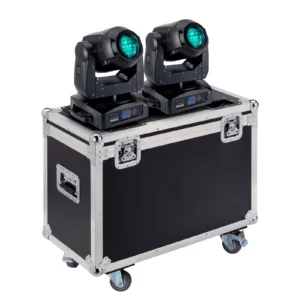
Comment s'approvisionner en flight cases en Chine : fabricant, matériaux, MOQ et liste de contrôle QC
Quick Answer:
To source a road case from China, define the equipment, transport conditions and protection needs first, then specify dimensions, panels, aluminum profiles, hardware and interior retention. Compare suppliers on relevant experience, sample communication and documented inspection steps—not unit price alone. Confirm MOQ, sample terms, production timing, packaging and shipping assumptions in writing. Sun Case lists cas de vol and custom case categories; buyers should verify every construction detail, test claim and commercial term for the exact project before approving production.
Road case projects can look similar in a product photo while differing in panel construction, foam layout, hardware and shipping setup. This guide gives distributors and purchasing managers a practical sequence for turning an application into an RFQ, evaluating a road case manufacturer and checking a sample. It also explains how to distinguish road case, flight case and ATA case language without treating the terms as proof of a particular test level.
How Should Buyers Define a Road Case Application?
Start with the item the case must protect and the route it will travel. List the equipment dimensions, weight, fragile points, cables and accessories. Explain whether the case will be hand-carried, loaded into a vehicle, handled by a freight carrier, stacked in storage or moved repeatedly between venues. These conditions affect size, handles, casters, interior retention and packing requirements.
Also clarify the required outcome. Does the buyer need organized storage, easier transport, protection from routine handling, or a specified environmental or impact performance? A road case for local event equipment may not need the same build as one exposed to frequent freight movement. If a formal test or rating is required, identify the target and ask what evidence can be supplied for the exact configuration.
What Case Construction and Materials Should an RFQ Specify?
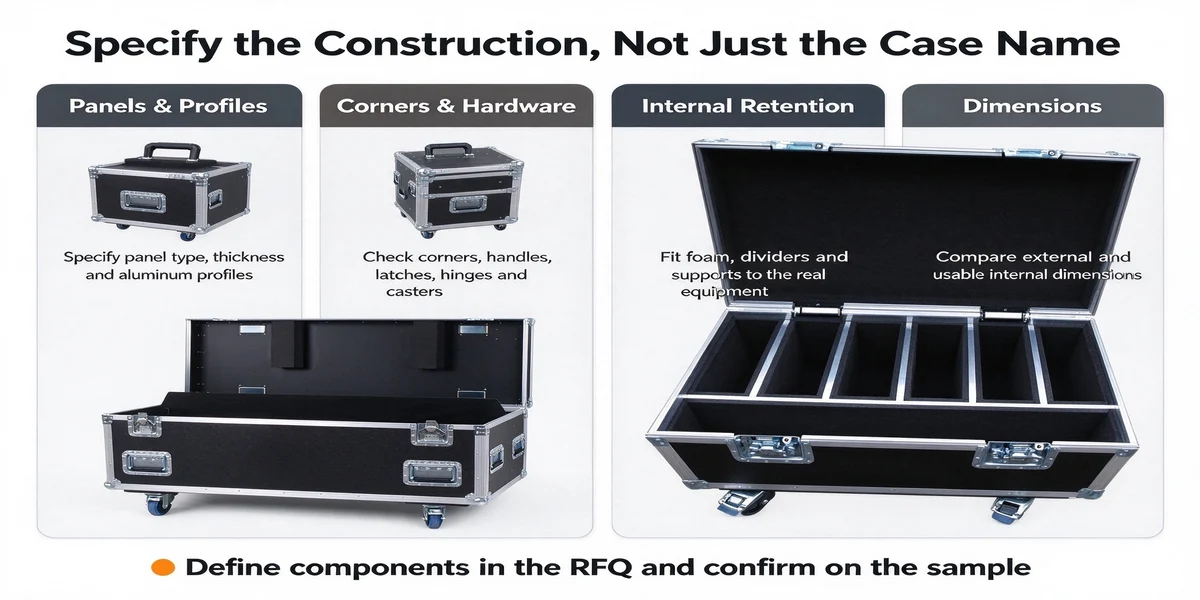
Avoid relying on a broad phrase such as “heavy-duty case.” Describe the parts and functional requirements. A case may combine panels, profiles, corner hardware, handles, latches and an interior made from several materials. Ask suppliers to identify the materials by component, including thickness or grade where it affects the design.
What should buyers specify about panels and thickness?
Panel type and thickness affect weight, stiffness, appearance and cost. Buyers may encounter plywood, composite or plastic panels, among other constructions. The appropriate choice depends on the payload, case size, handling conditions and budget. Ask for a material description and drawing for the proposed model; do not infer panel composition from a surface finish or product title.
How do aluminum profiles, corners and hardware affect use?
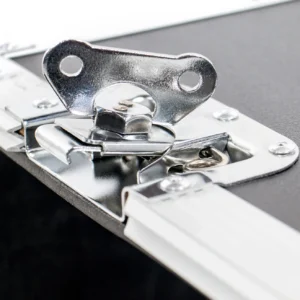
Aluminum profiles join and protect panel edges. Corners, handles, latches and hinges affect assembly, access and routine handling. For a case moved by more than one person or with equipment, specify how it will be lifted and whether recessed hardware, wheels or stacking features are needed.
Check handle attachment, latch alignment and hardware operation on a sample. If casters are included, state the expected floor conditions and whether brakes or particular wheel arrangements are required. Confirm the final components in the order specification rather than assuming they are standard across a supplier’s range.
How should buyers plan foam, lining and internal retention?
Interior retention keeps equipment positioned inside the case. It may use fitted foam, dividers, straps or other supports. Provide actual equipment dimensions and identify areas that must not bear pressure, such as knobs, screens, connectors or delicate controls. Include accessories in the layout so they do not move into the main item during transport.
The case’s internal dimensions are smaller than its external dimensions because profiles, lining, hinges and hardware occupy space. Ask for a dimensioned layout and approve a sample with the real payload. A generic “foam included” description does not define foam type, density, cut pattern or fit.
Road Case vs Flight Case vs ATA Case: What Build Is Required?
These names are used differently across suppliers and markets. “Road case” and “flight case” often describe reusable transport cases for equipment, while “ATA case” may be used to indicate a case intended for air transport or a particular standard. The label alone does not confirm certification, test results or suitability for a specific shipping environment.
For procurement, specify the construction and performance you require: payload, internal layout, handling conditions, dimensions, hardware and any test standard or documentation. If an airline, rental company or customer requires a specific standard, ask for the applicable version and evidence. Align the quote and sample to that requirement before comparing offers.
How Can Buyers Evaluate a Road Case Manufacturer?
Look for evidence that the supplier understands the case type and can communicate changes clearly. Review comparable product examples, ask how custom dimensions and interiors are handled, and request confirmation of which components are standard or custom. A product catalogue is useful for exploration; it does not prove the supplier can meet every project requirement.
What experience and customization capability should buyers review?
Ask for examples relevant to the payload, case size and intended handling. Determine whether the supplier can review drawings, dimensions or physical samples and can explain design trade-offs in practical terms. If a custom case is required, request a marked-up drawing or specification that identifies the proposed construction before sampling.
What should happen during sample development and communication?
The sample should represent the intended bulk configuration. Agree on what it will include, who supplies the payload or reference sample, how revisions are recorded and who approves the final version. Keep a dated record of dimensions, materials, layout, hardware and finish. Confirm whether the approved sample will be retained or used as a production reference.
How should buyers evaluate quality control?
Ask which checks are performed and when: incoming materials, assembly, dimensions, hardware operation, interior fit, appearance and packaging. Agree on the inspection scope, sampling approach, defect categories and corrective process for the order. A general statement about quality control is not a substitute for defined acceptance criteria.
How Do MOQ, Sampling and Production Planning Affect the Order?
MOQ (minimum order quantity) may vary by model, materials, customization and packaging. Request a quote at realistic order quantities and ask whether sample cost, tooling or artwork setup is separate. For repeat orders, document the approved specification and revision so a later production run does not silently change the configuration.
Ask the supplier to state the current sample and production schedule and what starts the lead-time clock. Artwork approval, deposit, material availability or sample sign-off may affect timing. Clarify currency, Incoterm, destination, carton count, packed dimensions and payment terms. These details help buyers compare total landed cost instead of an isolated unit price.
Sun Case’s flight case category et custom aluminum case category can help buyers review listed formats. Confirm the exact model’s materials, dimensions, MOQ, customization scope and delivery terms directly in a current quotation.

What QC Checklist Should Buyers Use Before Mass Production?
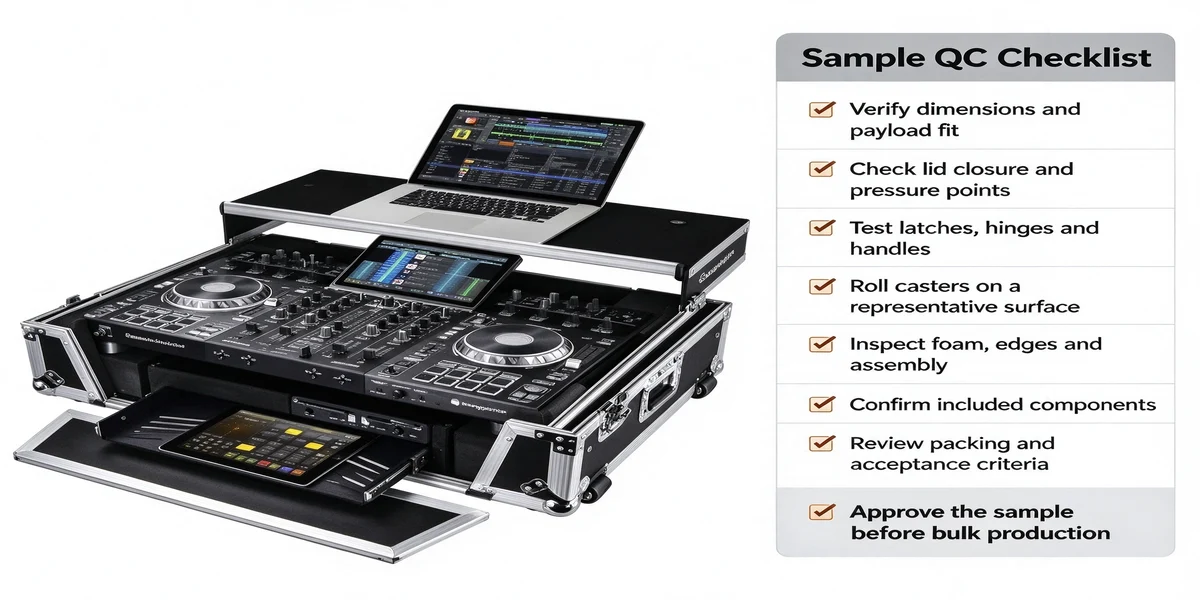
Approve a sample against a written specification and use the same points for inspection before shipment.
Do the dimensions and fit match the payload?
Measure the case externally and internally. Load the equipment and accessories in the specified positions. Confirm that the lid closes normally, the item does not shift excessively and no pressure falls on fragile points. Check that cables, handles or protrusions do not interfere with the case structure.
Do hardware, casters and handles work as specified?
Open and close every latch and hinge. Check handle attachment and movement. If the case has casters, roll it on a representative surface and verify the requested arrangement and brakes. Look for sharp edges, loose fasteners, misalignment or binding.
Are interior protection and workmanship acceptable?
Check foam or divider position, adhesion, cut quality and retention. Inspect panel edges, corners, finish and visible assembly. Confirm included accessories and review the packed case for rubbing or pressure points. Record defects with photos and identify the sample or production lot.
How Should Road Cases Be Packed and Shipped in Bulk?
Packaging can affect freight cost, handling labor and damage risk. Confirm the number of units per carton, protective materials, carton dimensions, gross weight and any pallet requirements. Ask whether the packaging suits the planned shipping route and whether the case itself can be nested or stacked safely; do not assume a product is stackable because it has a flat lid.
Agree who is responsible for export documents, freight booking, insurance and destination charges under the selected shipping terms. For a custom road case, make packaging part of the approved order specification so a change in carton or protection is discussed before dispatch.
What Information Belongs in a Road Case RFQ?
Include enough detail for comparable quotes:
- Equipment and accessory list, dimensions and weight.
- Intended handling, transport route and storage conditions.
- Internal and external size targets, if known.
- Panel, profile, corner, hardware and interior requirements.
- Drawings, photos, CAD files or a physical reference sample.
- Required performance tests or documents, if applicable.
- Branding, color, labels and packaging requirements.
- Quantity, destination, requested schedule and shipping terms.
- Sample, inspection and acceptance expectations.
Ask the supplier to flag assumptions and list exclusions. This makes differences in construction or price visible before approval.
FAQ: Sourcing Road Cases from China
1. What should I ask a road case manufacturer before ordering?
Ask about relevant experience, proposed materials by component, custom design process, sample terms, MOQ, current production timing, packaging, inspection criteria and shipping assumptions. Request the exact specification for your case.
2. Does “ATA road case” guarantee a specific protection level?
No label by itself proves a test result or certification. Identify the required standard or performance, then request model-specific documentation and agree how it applies to the proposed case.
3. How can I compare road case suppliers fairly?
Send the same payload, dimensions, construction, quantity, destination and inspection requirements to each supplier. Compare sample and tooling costs, packaging and shipping assumptions alongside unit price.
4. Should buyers approve a sample before a bulk order?
For a new or customized case, a representative sample can verify fit, access, hardware and finish before production. Record the approved configuration and inspection criteria in the order documents.
Source the Case Around Its Real Use
Reliable road case sourcing starts with a clear payload and handling brief. Specify materials and hardware by component, evaluate a fabricant’s sample process, and agree on MOQ, inspection, packaging and shipping terms in writing. Sun Case lists flight case and custom case options for buyers to review; share your equipment dimensions, quantity, destination and requirements to discuss a configuration and confirm current terms.
Publications similaires
Guide de test de boîtiers rigides de protection : Comment les acheteurs évaluent les indices IP, les tests de chute et la résistance aux chocs
Loquets de flight case : assurer la sécurité de votre équipement pendant le transport