How to Choose a Portable Makeup Case Size for Different Cosmetic SKU Loads
Quick Answer:
To choose a portable makeup case size, start with the products it must hold—not the exterior dimensions or a generic capacity claim. List each cosmetic SKU, measure its package, and account for trays, dividers, padding and space needed to remove items. A compact retail set, a working makeup artist kit and a broad multi-category assortment need different layouts. Sun Case offers portable makeup case formats with customizable tray options; confirm usable dimensions and fit with a pre-production sample before ordering.
Buyers comparing a makeup train case or professional makeup case often face the same problem: the outside looks roomy, but the usable storage does not match the product mix. This guide explains what “size” means, how to map SKUs to case formats, and what to verify before a wholesale order. Use it to create a clear case organizer brief and avoid paying for unused volume—or discovering that key items do not fit.
What Does “Size” Mean for a Portable Makeup Case?
Case size includes more than its external length, width and height. Those measurements help estimate shipping volume and shelf space, but the internal usable dimensions determine what the buyer can actually store. Frames, lining, corners, hinges and trays take up space. Ask for both external and internal measurements, and clarify exactly where each measurement is taken.
How do external and usable dimensions differ?
External dimensions describe the full case footprint. Internal usable dimensions describe the clear space available for products. On a rigid portable makeup case, the frame and lining reduce interior width; on a multi-tier makeup train case, trays divide vertical space into separate compartments.
Measure your products at their widest points, including caps, pumps and protective packaging. Then compare those measurements with the clear width, depth and height of each compartment—not just the main body. Leave practical clearance so products can be placed and removed without scraping labels or catching on neighboring items.
How do trays, dividers and compartments affect capacity?
A makeup case organizer can create useful separation, but every divider occupies space. Sliding trays may improve access to smaller products while reducing the height available below. Removable dividers can adapt a layout, although they may not provide the same fixed protection or structure as a fitted compartment.
Ask whether trays and dividers are standard, optional or customizable for the selected model. Check their usable measurements and how they move when the case opens. For a buyer planning an assortment, a layout drawing is more useful than a single “large capacity” label.
How Should Buyers Build a SKU Load Profile Before Choosing a Case?
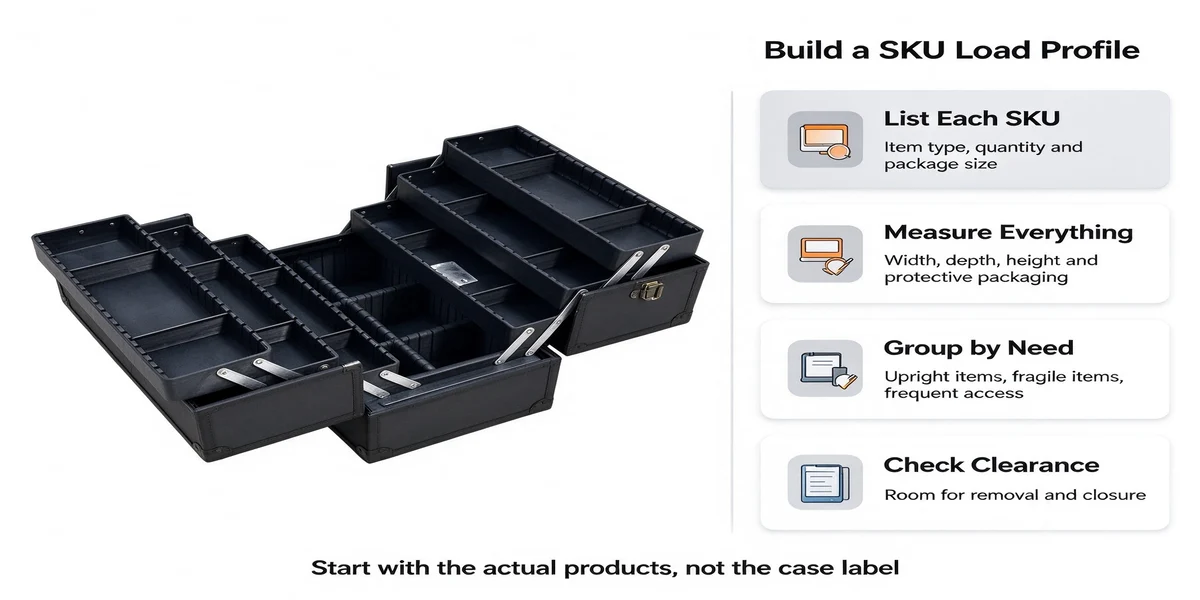
Create a simple inventory before comparing portable makeup case options. Record each item type, quantity, package dimensions, weight and whether it must stay upright. Include accessories such as brushes, palettes, bottles, tools, wipes and testers. If the same case will serve several customer groups, list the differences between their kits rather than combining everything into one oversized estimate.
Group products by handling needs. Glass or leak-prone containers may need separation; frequently used items should be easy to reach; small products can get lost in oversized compartments. Note which items can lie flat and which must remain upright. This profile turns an unclear request for “more space” into an actionable brief for a supplier.
Which Portable Makeup Case Format Fits Each SKU Load?
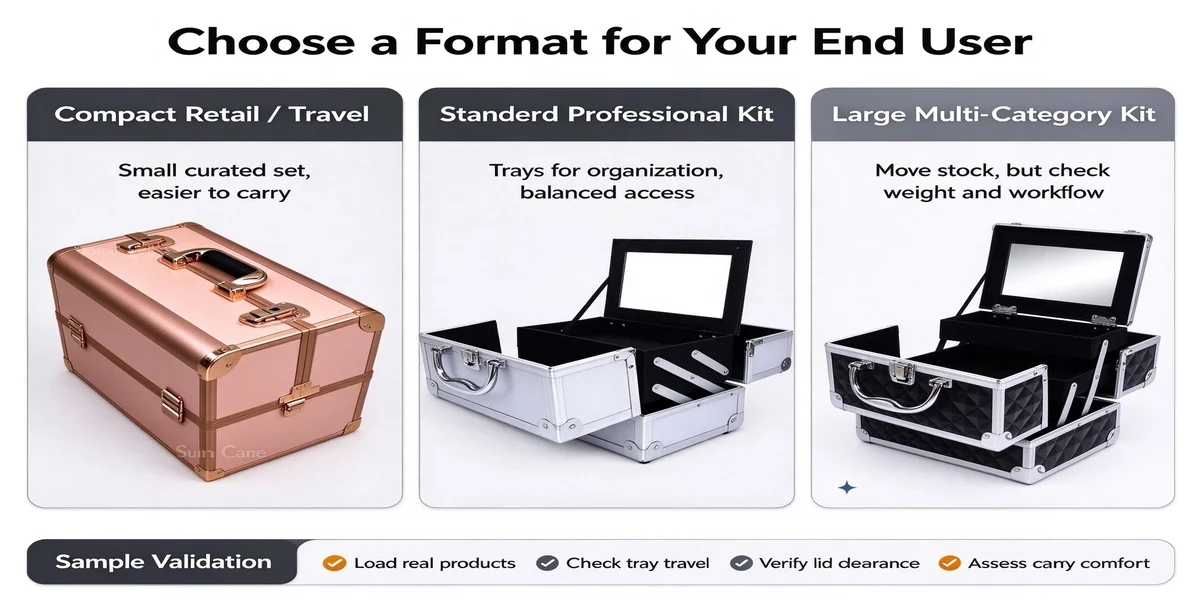
There is no universal size chart because packaging and assortment vary. Use the following profiles to shortlist a format, then validate the actual load in a sample.
Is a compact case enough for retail or travel assortments?
A compact case can suit a small curated set, travel collection, nail products or a limited selection of cosmetics. It is easier to carry and can take less shelf and shipping space. The trade-off is limited room for product expansion, accessories or larger packages.
For this use, identify the must-have SKUs and avoid designing around occasional extras. A small portable makeup case should still allow users to access products without removing an entire tray. Check whether a handle, strap or lock is included in the chosen configuration instead of assuming every version has the same features.
What size works for a standard professional makeup kit?
A professional makeup case usually needs a balance of capacity and access. The load might include palettes, brushes, complexion products, tools and frequently replenished items. Several trays can help separate categories, while a lower compartment can hold taller products—provided its internal height suits the actual packaging.
For a working artist, portability matters alongside storage. Consider the loaded weight, carrying distance, opening footprint and where the case will be set down. If the kit is used at client sites, a layout that keeps common products visible may save time during setup.
When does a large multi-category kit need a bigger format?
A large kit may combine skincare, makeup, brushes, hair or nail products and backup stock. A larger portable makeup case may reduce the need to carry multiple organizers, but a heavy, crowded case can slow setup and increase handling strain.
Separate daily-use products from backups and infrequently used items. Compare one large format with two smaller cases; two cases may be easier to organize and move, even if the combined volume is similar. Confirm that wheels or a trolley structure are needed before choosing a rolling format.
How Do Trays, Dividers and Foam Change Usable Capacity?
Capacity is not simply the number of items that fit when packed tightly. Products need enough clearance for removal, and the case needs to close without pressing on caps, mirrors or other contents. Trays may improve organization but can reduce the height available to items underneath. Dividers can prevent contact but may create narrow spaces that do not match the product assortment.
Foam or soft lining can cushion selected items, though it also reduces internal dimensions. If protection is a priority, show the supplier which products are fragile and where they may contact the case. If quick access is more important, a flexible divider arrangement may be more practical. Test the layout with representative products before confirming the order specification.
Sun Case’s portable makeup case range includes different case styles, including formats described with slide trays and compartments. Treat product listings as starting points: check the exact model’s dimensions, included components and customization scope before selecting it for a wholesale line.

How Do Retail Channel and End Users Affect Size Selection?
The right portable makeup case depends on who will use it and where it will be sold. A beauty supply store may need several price and capacity tiers. An online seller should consider package dimensions, shipping cost and whether product photos explain the interior clearly. A professional distributor may prioritize durable organization, repeat availability and brand presentation.
End-user behavior matters too. A travel customer may value a compact profile, while a mobile makeup artist may need fast access to a broader kit. A salon may keep the case in one place and care more about compartment organization than carrying weight. Define the use case before comparing supplier quotations so that the same requirements are applied across samples.
How Can Buyers Validate Capacity with a Pre-Production Sample?
Load the sample with representative products from the SKU profile, including the tallest, widest and most fragile items. Place them in the intended positions, close the case normally, and check that nothing is pinched or forced. Open and close trays several times; confirm products can be removed without shifting neighboring items.
Review the case when empty and loaded. Measure the internal compartments, note tray travel and check whether the lid contacts contents. Carry it as the end user would and assess balance, handle comfort and overall weight. Photograph the approved layout and record model, dimensions, materials and included accessories so a later production run can be compared against the same reference.
Do not infer a formal load or impact rating from a sample fit check. If a specific performance claim matters, request the relevant model-specific evidence and agree on inspection criteria in the purchase documents.
What Size Information Should Go into an OEM RFQ?
A clear request for quotation (RFQ) helps suppliers quote the same case configuration. Include:
- Intended customer and use scenario.
- SKU list, quantities, package dimensions and upright/flat orientation.
- Required internal compartment dimensions and target external size, if known.
- Tray, divider, pocket or foam preferences.
- Preferred materials, color, branding and packaging.
- Order quantity, destination and required delivery window.
- Sample expectations and checks for capacity, fit and finish.
Ask the supplier to identify standard features versus optional or custom items. Confirm MOQ (minimum order quantity), sample cost, production timing and shipping terms in the current quotation; these can vary by model and order. Sun Case describes OEM/ODM development that can start from a drawing, sample or functional brief. Send the load profile and request a proposed layout for review before bulk production.
FAQ: Choosing a Portable Makeup Case Size
1. How do I measure a portable makeup case for wholesale?
Record the external dimensions for storage and freight planning, then request clear internal measurements for the body and each tray. Compare those spaces with actual product packaging and leave room for removal and closure.
2. Is a larger makeup case organizer always better?
No. More capacity can add weight, cost and shipping volume. Choose a layout that fits the intended assortment and workflow, and compare one large case with multiple smaller formats when users need to move products frequently.
3. How many products fit in a makeup train case?
There is no reliable universal count. Bottle and palette sizes, tray depth, divider layout and required clearance all change capacity. Test the intended SKU load in the selected model.
4. What should distributors ask a portable makeup case supplier?
Ask for internal and external dimensions, tray measurements, materials, included accessories, customization options, MOQ, sample terms, lead time, packaging and inspection details for the exact configuration.
Choose Around the Load, Then Confirm the Sample
The best portable makeup case size is the one that fits the intended SKUs, gives users practical access and stays manageable to carry and ship. Build a product load profile, compare usable compartment dimensions, and approve a sample with real products inside. Sun Case’s portable case range offers a starting point for wholesale comparisons; share your load list, target quantities and branding needs to discuss a configuration and confirm current order terms.