EPE vs XPE Foam for Flight Cases: A Manufacturer’s Specification Guide
Quick Answer: EPE or XPE for Your Flight Case?
Foams for supplies, from those utilized for guitar flight case sets to various flight case parts, refer to materials that make it incredibly easier for their users to care for their belongings, whether they are preparing for a show on stage, or safeguarding their possessions, such as accessories and jewelry, from conspicuous acts.
Flight case foam does three jobs: it holds equipment in position, absorbs impact energy during transit, and keeps moisture away from metal surfaces. The material you pick changes how well the case performs each of those jobs.
Sun Case Supply manufactures custom flight cases and the foam inserts that go inside them. That matters for one practical reason: the foam you specify and the case structure that holds it have to be designed together. Get one wrong and impact loads transfer straight to your equipment.
Among their offers are foams. Their markets could find several types of these foams sourced out from the catalog of this manufacturing brand, including cases for industrial tools, sports cards, vinyl records, animal grooming cases, and gun cases.
Two of the most widely recognized materials for these items are cross-linked polyethylene foam, otherwise referred to as XPE foams, and the EPEs, or the expanded polyethylene. Find out about the differences of these materials, from the seemingly hybrid ones to what’s efficient for its uses in this comparative guide that will tackle the following pointers:
– What are foams for those necessities?
– Foams for flight cases + their applications
– The differences between such foams
Foam Types Used in Flight Cases
Five foam types are common in flight case construction. They differ in density, cell structure and cost — and those three variables decide which one fits your equipment weight and shipping method. These have several types. Find out more about them with where they are utilized:
1. Standard Polyethylene Foam
Characterized as a closed-cell, durable, and lightweight material for flight cases, this is also denoted for its excellent resistances against impact, water and chemicals, and vibration. They’re firmer than your polyurethane foam, making them ideal for supporting heavy equipment, such as guns. They are also recyclable.
2. Expanded Polypropylene Foam
Meanwhile, this EPP pertains to your lightweight and closed-cell foam as well for flight cases. They are also highly protected against impacts, are durable, and are energy-absorbing. They absorb shock and vibration for fragile, high-value payloads — stage lighting rigs, calibrated instruments, medical devices, and field equipment that cannot tolerate a hard knock in transit. They also can resist water, chemicals, and oils, able to maintain their shape even after impact. They are also at the forefront of thermal insulation and recyclability.
3. Stratocell R Foam
Stratocell R foams are among the most trusted for flight cases because they are also lightweight and closed-cell. Not only those, but they contain a minimum of 65 percent recycled content, making them sustainable choices for such cases.
Their features are excellent cushioning and impact protection, shielding your items from repeated impacts, such as during flights. The material is also non-abrasive, water resistant, and insulative, highly customizable, therefore. You may also recycle them!
Hairdressing Tool Storage Box Aluminum Barber Tool Case Organizer for Clippers Trimmers Scissors
4. Expanded Polyethylene Foam
What is EPE foam? Well, first, don’t confuse this EPE foam with the others on this list. An EPE foam is crafted out of low-density polyethylene, characterized by its high elasticity. Thus, they are also flexible and light, allowing you to bend them to absorb the impactful forces. Use them for irregularly-shaped objects that can benefit from their flexibility. Plus, their shock absorption capacity is perfect for light electrical appliances.
5. Cross-Linked Polyethylene Foam
On the other hand, what is XPE foam? XPE materials for foams are those noted with their high shock absorption capacity, giving your items the right cushioning as well. Since they are mostly waterproof and moisture-proof, they can offer the best protection against rusting, expanding their longevity with you.
Also lightweight, XPE foams are preferred as foam linings in flight cases because of how they can absorb shock, are flame-retardant, are easily adjustable, can recover easily from creasing, are non-slip and odorless, and has a longer shelf life.
| Foam | Cell structure | Weight | Impact & shock absorption | Water / chemical resistance | Recovery after impact | Recyclable | Best suited for |
|---|---|---|---|---|---|---|---|
| 1. Standard Polyethylene (PE) | Closed-cell | Lightweight | Excellent — resists impact, water, chemicals and vibration | Water + chemical resistant | Regains shape | Yes | Heavy equipment such as firearms; needs a firm grade |
| 2. Expanded Polypropylene (EPP) | Closed-cell | Lightweight | Excellent — energy-absorbing, retains shape after impact | Resists water, chemicals and oils | Retains shape | Yes | Fragile items — glassware, kitchenware; thermal insulation |
| 3. Stratocell R | Closed-cell | Lightweight | Excellent cushioning; shields against repeated impact | Water resistant | — | Yes (min. 65% recycled content) | Touring gear under repeated impact; non-abrasive surface |
| 4. Expanded Polyethylene (EPE) | Closed-cell, low-density PE | Light | Good — flexible, bends to absorb impact | Resists water, oil and chemical spillage | Regains original shape | Yes | Irregularly shaped items; light electrical appliances |
| 5. Cross-Linked Polyethylene (XPE) | Closed-cell, chemically cross-linked | Lightweight | High shock absorption | Waterproof and moisture-proof — prevents rust | Recovers easily from creasing | Yes | Flight case foam lining; humid climates and long storage |
EPE vs XPE: Side-by-Side Comparison
| Parameter | EPE (Expanded Polyethylene) | XPE (Cross-Linked Polyethylene) | EPP (Expanded Polypropylene) | Standard PE (Polyethylene) |
|---|---|---|---|---|
| Density | Low density | Low to Medium density | Low density | Medium to High density |
| Cell Structure | Closed-cell | Closed-cell, cross-linked | Closed-cell | Closed-cell |
| Water Absorption | Waterproof | Waterproof & moisture-proof | Water, chemical, and oil resistant | Water and chemical resistant |
| Resilience / Rebound | High elasticity, flexible | High shock absorption, non-slip | Energy-absorbing, maintains shape | Firm, vibration resistant |
| Temperature Resistance | High thermal resistance | Flame-retardant | Thermal insulation | Standard |
| Cost Level | Economical | Mid to High-tier | High-tier | Low-tier |
| Typical Applications | Yoga mats, light electrical appliances | Flight case linings, heavy/high-value equipment | Stage lighting, medical devices, fragile payloads | Industrial tools, gun cases, heavy equipment |
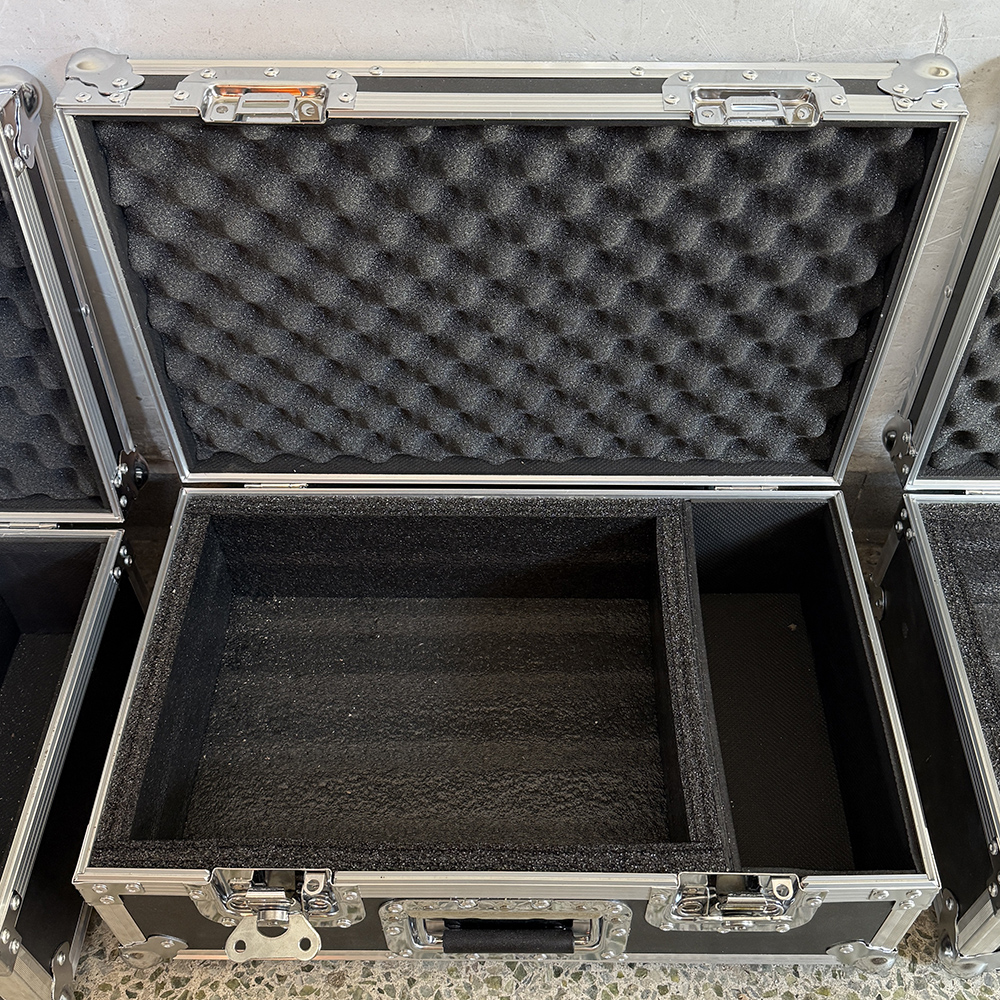
Let’s start with the EPE foam. A material used in making yoga mats, shin guards, and the like, this foam features a high weight-to-strength ratio and high thermal resistance. Meaning to say, you can heat and melt them several times, reshaping them into new objects due to these properties.
Aside from resisting water, oil, and chemical spillage, they can quickly regain their original shape after impacts and shocks. They won’t break, fracture, crumble, or shatter, never.
Plus, they are also waterproof. If there are left-out materials, they can easily be collected and recycled without damaging the foam.
On the other hand, the XPE foam material is crafted using polyethylene foam in low density with several filters, adding chemical cross-linking and foaming agents, suitable in the construction of stuff wherein thermal insulation, moisture resistance, vibration, and sounds are critical. Aside from its use for flight cases, the material is also helpful in the infrastructure industry.
Which Foam Should You Specify? By Application
-
Specify XPE when the payload is heavy, high-value, or requires international shipping and moisture resistance.
-
Specify EPE when the payload is light to medium weight and budget per unit is the primary constraint.
-
Choose a mixed configuration (XPE in the lid, EPE in the base) for cost-balanced performance across mixed fleets.
| Material | Cell Structure | Weight | Key Performance | Water & Chemical | Shape Memory | Recyclable | Use Cases |
|---|---|---|---|---|---|---|---|
| 1. Standard Polyethylene (PE) | Closed-cell | Lightweight | Excellent — resists impact, water, chemicals and vibration | Water + chemical resistant | Regains shape | Yes | Heavy equipment such as firearms; needs a fit grade |
| 2. Expanded Polypropylene (EPP) | Closed-cell | Lightweight | Excellent — energy-absorbing, retains shape after impact | Resists water, chemicals and oils | Retains shape | Yes | Fragile items — glassware kitchenware thermal insulation |
| 3. Stratocell R | Closed-cell | Lightweight | Excellent cushioning; shields against repeated | Water resistant | — | Yes (min. 65% recycled content) | Touring gear under repeated impact; non abrasive |
Sun Case Supply is a leading company where you can source out these foams. We are a manufacturer of cases for makeup, tools, guns, sports cards, animal grooming, and heavy-duty flight equipment.
When flying in your belongings from one country to the next, nothing should be compromised. Ready to specify? Send us your equipment dimensions and shipping route — we’ll recommend the right foam grade and quote the case with MOQ, sampling time and lead time included. Standard MOQ is 100 pcs, samples ship in about 7 days, and production runs 15–25 days. Contact us today for further information.
FAQ
1. What is the difference between EPE and XPE foam?
EPE is a low-density, highly flexible foam ideal for light objects. XPE is cross-linked, offering higher density, superior moisture-proofing, and better shock absorption for heavy-duty flight cases.
2. Which foam is best for flight cases?
XPE is generally best for flight cases requiring maximum durability and moisture protection. EPE is a cost-effective alternative for lighter domestic touring equipment.
3. Is XPE foam waterproof?
Yes, XPE foam is completely waterproof and moisture-proof, making it ideal for preventing rust on metal equipment during transit.
4. Can EPE and XPE foams be recycled?
Yes, both EPE and XPE foams are highly recyclable materials, aligning with sustainable manufacturing practices.